

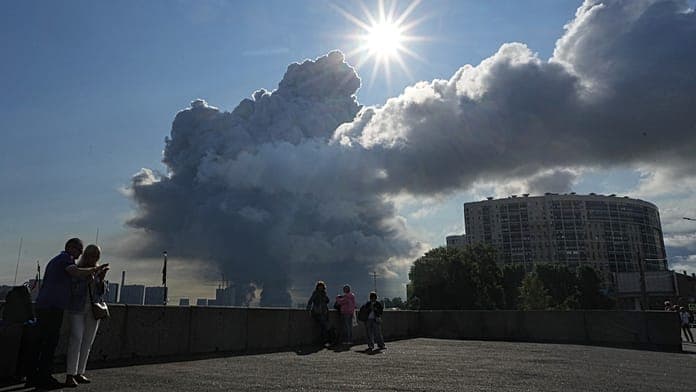
Ukrainian forces strike Wildberries warehouse in Moscow region, impacting logistics
Kyiv’s forces have targeted Wildberries’ largest warehouse, a 250,000-square-metre complex in the Koledino industrial park in the Moscow region.
Wildberries’ annual turnover, accounting for over 2% of Russia’s GDP, highlights the strategic significance of targeting its operations to disrupt financial stability and military supply lines.
“The strike has caused a fire and forced us to reroute our supply chains,” said Wildberries, acknowledging the significant impact of the attacks on their operations.
Ukraine has hit seven of Russian online retailer Wildberries’ 10 biggest warehouses, military says
Published on
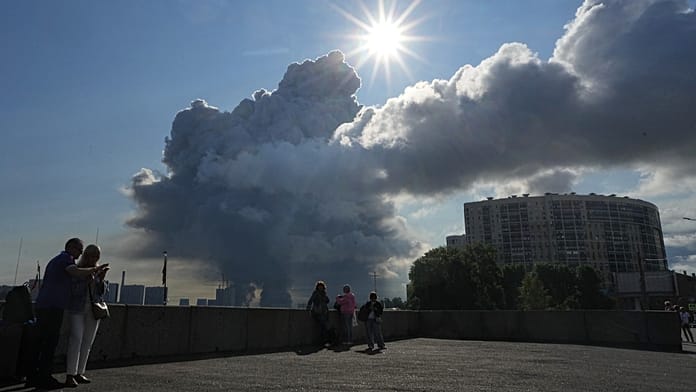
Ukraine’s Ministry of Defence said at the weekend that Kyiv’s forces had hit Wildberries’ single largest warehouse, a 250,000-square-metre complex at the Koledino industrial park in Podolsk in the Moscow region, around 420 kilometres from the border.
Seven logistics hubs belonging to Wildberries, Russia’s largest online retailer, have now been struck and knocked out of action since the campaign began in July.
Wildberries confirmed the strike had sparked a fire and forced it to reroute its supply chains, just as Ukrainian forces also struck a second depot in nearby Domodedovo on the same night.
Kyiv’s campaign underlines Ukraine’s capacity to reach deep inside Russia nearly four and a half years into Moscow’s full-scale invasion.
Kyiv’s campaign against Wildberries
Kyiv has justified the strikes by arguing Wildberries helps arm the Russian military, supplying drone components and navigation equipment alongside its consumer goods.
The US-based Institute for the Study of War said that Kyiv’s campaign is squeezing Russia’s economy while exposing a deeper vulnerability.
“Moscow simply does not have enough air-defence coverage to shield every piece of infrastructure in its rear, even ten of its most valuable commercial sites,” the ISW assessment concluded.
The campaign began on the weekend of 18 July, when drones hit sites in Elektrostal, east of Moscow, and the Tambov region, and has since fanned out from the capital and St Petersburg to southern Russia and as far as Yekaterinburg in the Urals, over 2,000 km from Ukrainian territory.
Roughly 20 Wildberries facilities have now been struck, according to the Associated Press.
Toll for Russia’s economy
Wildberries is often compared to Amazon for its size and importance to Russia’s economy.
To understand the scale of the business, Wildberries reports an annual turnover of between €70–75 billion, a figure that various estimates put at just over 2% of Russia’s GDP.
The market place is handling roughly half the country’s online orders and serving several hundred thousand sellers across eleven time zones, a role that expanded further after Western brands exited the market following the invasion.
This is why the fallout is rippling well beyond Wildberries itself.
Ukrainian officials said the goal is to disrupt military supply lines, stir domestic frustration and trigger a wider financial squeeze by pressuring banks such as VTB and Sberbank, which extended roughly €13 billion in loans to a company now struggling to keep them serviced.
Additional sources • AP












Great article! This really puts things into perspective. I appreciate the thorough research and balanced viewpoint.
Interesting read, though I think there are some points that could have been explored further. Would love to see a follow-up on this topic.
Thanks for sharing this! I had no idea about some of these details. Definitely bookmarking this for future reference.
Well written and informative. The examples provided really help illustrate the main points effectively.
This is exactly what I was looking for! Clear, concise, and very helpful. Keep up the excellent work!