


Get you up to speed: USS Lincoln crisis: How it compares to past aircraft carrier deployments
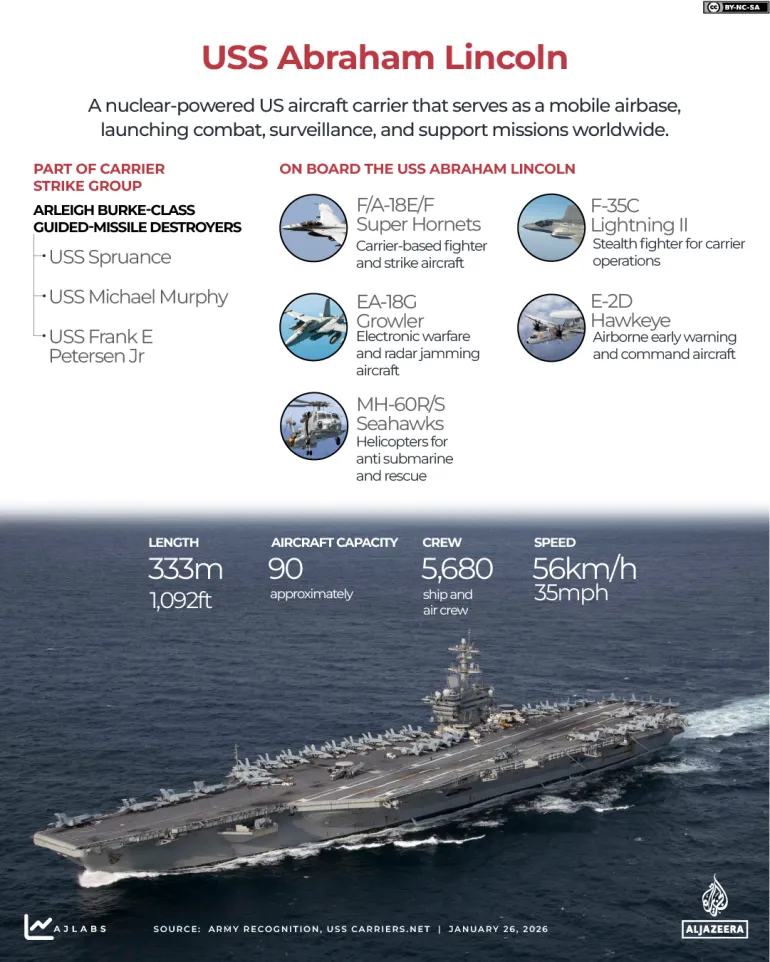
The nearly nine-month deployment of the USS Abraham Lincoln in the Gulf has led to a mental health crisis among the over 5,000 crew members, with reports of suicidal ideation and poor living conditions. Admiral Brad Cooper, commander of US Central Command, visited the ship amid rising concerns from lawmakers regarding crew morale and operational readiness.
The USS Abraham Lincoln has been engaged in maritime security and blockade operations around the Strait of Hormuz for nearly nine months, having departed from San Diego on November 21, 2025. Investigations into declining crew morale and mental health issues have prompted visits from senior officials, including Admiral Brad Cooper of US Central Command, as lawmakers express concerns regarding potential operational sustainability amid ongoing conditions aboard the vessel.
Following reports of deteriorating conditions on board the USS Abraham Lincoln, US lawmakers have expressed concern over mental health issues and supply shortages, prompting urgent inquiries into the deployment’s management. In response, Admiral Brad Cooper visited the carrier to assess the situation, while another vessel, the USS George Washington, is set to replace the Lincoln in the Gulf to alleviate pressure on the crew.
What remains unclear — It is not confirmed when the USS Abraham Lincoln’s extended deployment will officially end or if further operational adjustments are planned.
USS Lincoln crisis raises concerns over crew welfare and operational readiness
EXPLAINERNews|US-Israel war on IranUSS Lincoln crisis: How it compares to past aircraft carrier deployments
The USS Abraham Lincoln crisis highlights the toll of lengthy deployments on crew morale and operational readiness.
Published On 17 Aug 202617 Aug 2026
 Published On 17 Aug 202617 Aug 2026
The nearly nine-month extended deployment of the USS Abraham Lincoln in the Middle East has triggered a mental health crisis among the crew so intense that some sailors have tried to jump overboard, according to some US media reports.
Family members of the exhausted military crew on board the flagship aircraft carrier, reportedly located in the Gulf region, say there are food shortages, while broken toilets and showers have contributed to unsanitary conditions and poor health.
More than 5,000 staff members have been on board the vessel, which has been conducting maritime security and blockade operations at present around the Strait of Hormuz, for that time. It set sail on November 21, 2025 from its homeport of San Diego for an extended deployment to the Asia Pacific and the Middle East.
Since then, the ship has made just one single-day port stop at Naval Base Guam from December 11-12. The lack of port stops is a major issue for a ship the size and complexity of the USS Abraham Lincoln, experts say.
As US President Donald Trump and his defence secretary, Pete Hegseth, declare the United States is ready to continue an “indefinite” blockade on Iranian ports in the Gulf, we look at how this compares with other lengthy aircraft carrier deployments.
What is happening on board the USS Abraham Lincoln?
Reports by two US publications that cover military affairs, the Navy Times and Stars and Stripes, last week quoted family members of military personnel on board the vessel who said they were suffering from declining mental health and morale, and cases of suicidal ideation.
The Navy Times spoke on record with one sailor’s wife, identified as Annabelle Loma, who said he had attempted to jump overboard amid what she described as “severe burnout”.
The reports prompted urgent questions from US lawmakers. On Sunday, Admiral Brad Cooper, commander of US Central Command (CENTCOM), reportedly visited the USS Lincoln.
He praised the crew and stated on social media that “service at sea for long periods isn’t for everyone, while claiming the ship has the lowest number of mental health-related cases of the navy’s 11 active aircraft carriers. “It is uniquely challenging and tough, and every single one of us, including me, reacts to stressors in different ways,” he said.
But there is growing concern among Republican and Democratic lawmakers over what they see as a lack of accountability after Hegseth dismissed mental health reports last week as “completely misrepresented”.
When Trump was asked last week whether the USS Lincoln had been at sea for too long, he told reporters: “No, not nearly long enough.”
The USS Lincoln mission was supposed to end in May but has been extended repeatedly since then.
Last week, it emerged that another ship, the USS George Washington, has been rerouted from its position in the Pacific and will arrive in the Gulf within a week to take over duties from the Lincoln.
How long can US aircraft carrier deployments be?
The longest aircraft carrier deployment since the Vietnam War was the USS Gerald R Ford’s 326-day mission, which began in June 2025, under Trump’s second term in the White House.
That mission included NATO exercises in the Mediterranean, support for the US military operation that captured Venezuelan President Nicolas Maduro, and operations in the Red Sea during the US-Israel war on Iran.
After beginning its mission as a routine deployment to the Asia Pacific region, the Ford then moved into the South China Sea for security operations, before being deployed to the Arabian Sea and the Gulf of Oman to help the US enforce its naval blockade of the Iranian ports.
During this time, the USS Ford met several technical problems, including an onboard fire, which also triggered congressional scrutiny back home.
Lengthy deployments during the Vietnam War
Some of the longest aircraft carrier deployments in US history took place in and around the Gulf of Tonkin during the Vietnam War, with the USS Midway operating for 332 days, the USS Coral Sea operating for 329 days and the USS Saratoga operating for 308 days.
Similar to the USS Lincoln, they faced issues as well. Reports said the intense flight schedule of the active air combat during the Vietnam War pushed crew and operations to their limits.
While there are a number of lengthy aircraft carrier deployments from other countries, they pale in comparison to the US Navy’s record.
Russia’s Admiral Kuznetsov conducted a five-month mission to the Syrian coast which began in October 2016, but suffered several technical breakdowns, including aircraft losses.
The United Kingdom’s HMS Queen Elizabeth completed a seven-month deployment in 2021, which included combat strikes on targets in Iraq and Syria, despite significant breakdowns due to engineering issues.
Why is this issue so critical?
Many lawmakers have raised questions over whether the US can maintain an “indefinite” blockade in the Gulf if conditions on board a flagship aircraft carrier are so dire.
In a letter to Hegseth last week, Democratic Senator Richard Blumenthal raised the alarm over reports of deteriorating mental health on board, as well as shortages of basic supplies, water contamination, an increase in safety incidents and even disruptions to mail services, through which those on board receive care packages.
“These reports warrant immediate attention, but they also raise a broader question: whether the Navy can sustain the operational tempo now being demanded of its carrier force, particularly as this administration repeatedly commits US forces to conflicts of its own choosing and increasingly relies on aircraft carriers to sustain those operations,” Blumenthal wrote.
Experts say the lack of port stops is a major issue for the USS Abraham Lincoln.
Harlan Ullman, a retired senior naval officer and chairman of the strategic advisory firm Killowen Group, told WTX News that ships require onshore care to keep advanced technology operational over long periods.
“Ships need maintenance, particularly ships that are extremely complicated with very advanced weapon systems such as nuclear-powered carriers with very advanced systems, and there are things that you cannot do in terms of maintenance under way,” Ullman said.
“There are lots of things that you can do at sea, but there are far more things that can only be done in port,” he pointed out.
Ullman noted that extended deployments “erode the readiness and capability of that ship the longer it’s at sea, and it lacks the ability to repair and extend maintenance”.
He added that the Trump administration must prioritise naval readiness over politics, saying “this is a national issue, not a local one; and the administration should not be so defensive. It should say, ‘OK, we’ll see what’s going on, and then if there are some issues, we’ll take care of them.’”
What are the drawbacks of deploying aircraft carriers?
Aircraft carriers are built to be on deployment for many months at a time. However, that comes with a high cost, as extended cruises increase the risk of technical breakdowns and can also lead to reduced staff morale and mental health concerns.
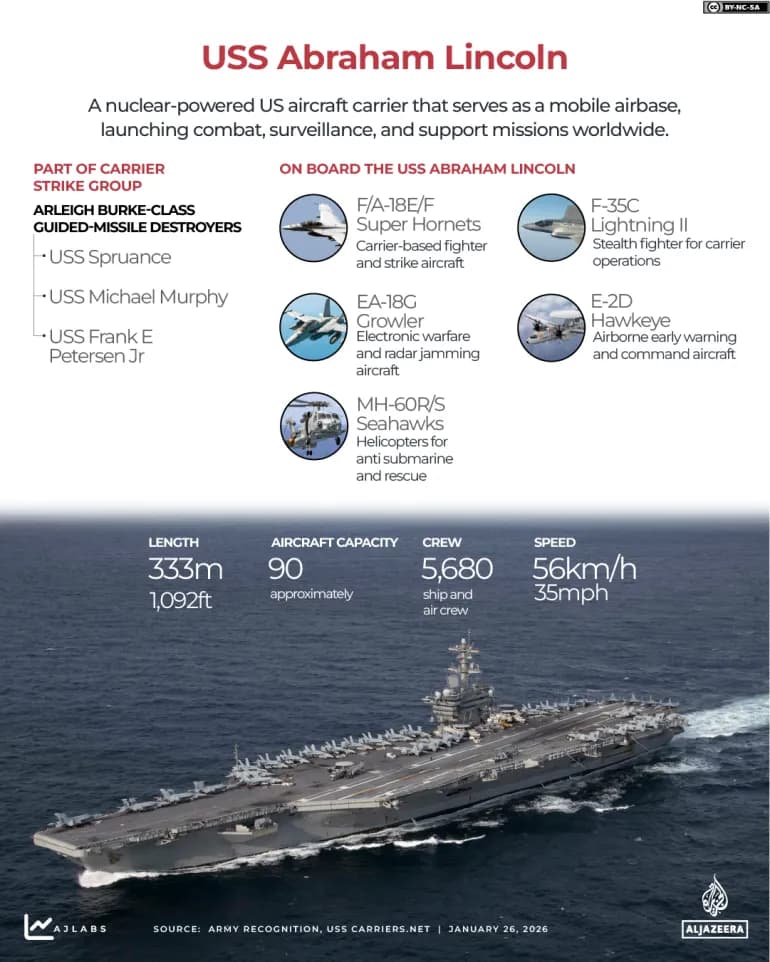
Large aircraft carriers are expensive. The USS Abraham Lincoln cost $2.2bn to build in 1989, and it costs tens of millions of dollars to operate on a daily basis.
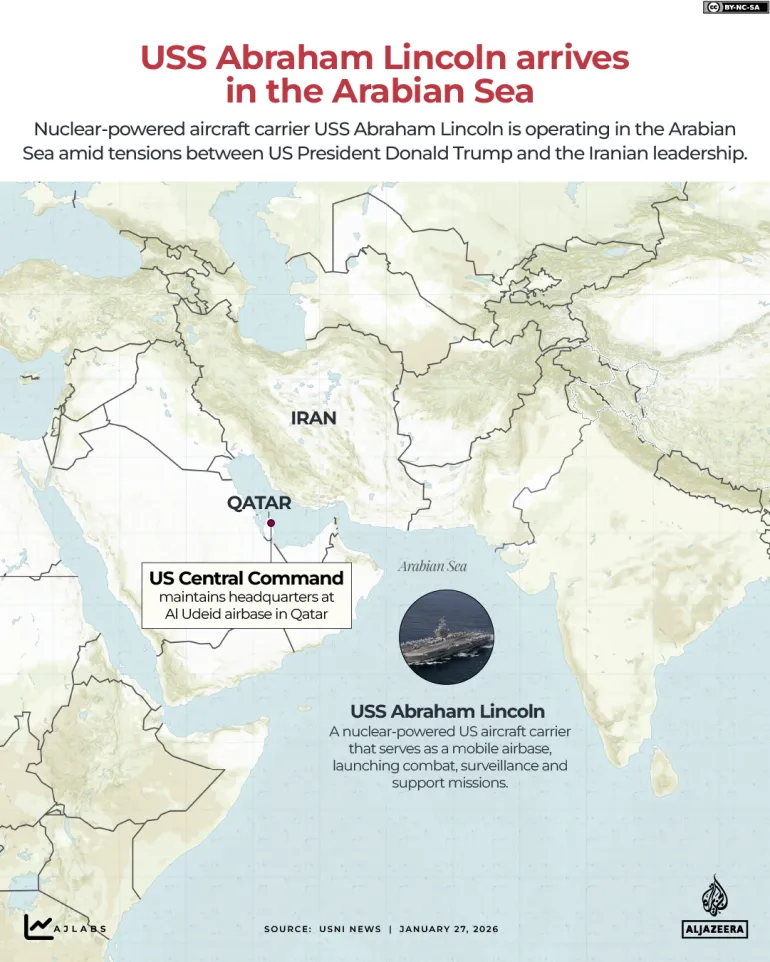
Recent conflicts in the Red Sea have also underscored the vulnerability of large aircraft carriers. Houthi rebels, who do not possess a formal navy, have nevertheless managed to put significant pressure on large US Navy aircraft carriers operating near the limits of their missile range.
At one point during the US-Israel war on Iran, the USS Gerald Ford was forced to sail hundreds of miles away from the Iranian coast to reduce the risk of being hit by missiles, limiting its effectiveness.












Great article! This really puts things into perspective. I appreciate the thorough research and balanced viewpoint.
Interesting read, though I think there are some points that could have been explored further. Would love to see a follow-up on this topic.
Thanks for sharing this! I had no idea about some of these details. Definitely bookmarking this for future reference.
Well written and informative. The examples provided really help illustrate the main points effectively.
This is exactly what I was looking for! Clear, concise, and very helpful. Keep up the excellent work!