


Media Lens: Wildfires engulf France and Spain as extreme heat continues
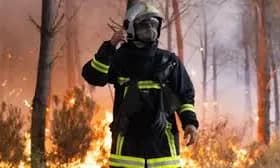
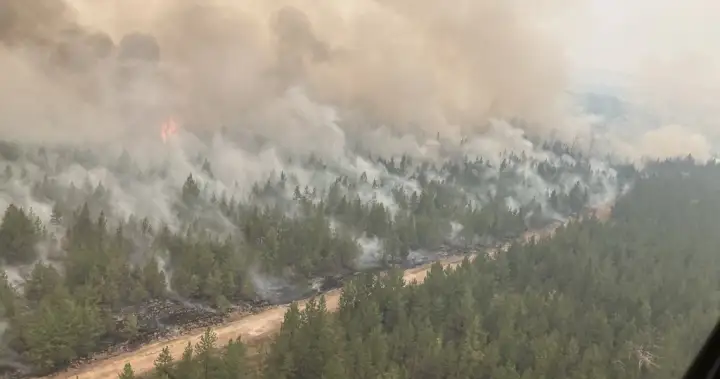
Wildfires currently affect France and Spain, exacerbated by ongoing heatwaves. The mayor of Bordeaux warns that one fire is now just nine miles from the city.
Quick links: What has happened | Status quo | Confirmed facts | Preconceptions | Elisions | One story, four angles | Related links
What has happened
Recent wildfires have ravaged parts of France and Spain, exacerbated by extreme heatwaves sweeping across the regions. In Bordeaux, France, a mayor has warned that a wildfire is now only nine miles away from the urban area, prompting concerns for local residents and emergency services.
Firefighters are battling to contain the blazes in both countries, with Spain particularly affected as new fires ignite amidst the ongoing high temperatures. The situation remains tense as predictions indicate continued heat, complicating firefighting efforts.
Status quo
Wildfires have intensified across France and Spain amid extreme heatwaves. The region has been experiencing high temperatures, which have contributed to the fire’s rapid spread. Reports indicate that the wildfire is now approximately nine miles from Bordeaux, prompting local authorities, including the mayor, to issue warnings regarding potential evacuations and increased firefighting efforts to control the situation.
Confirmed facts
- Wildfires are currently burning across France and Spain.
- The wildfires have been exacerbated by ongoing heatwaves in the region.
- A wildfire near Bordeaux, France, is reported to be within nine miles of the city.
- The wildfire in France is the first recorded instance of a pyrocumulonimbus cloud being created in the country.
- Both Spain and France are actively fighting to contain these wildfires.
Preconceptions
- BBC: Prioritizes the geographical impact, emphasizing the closing distance of wildfires from populated areas like Bordeaux, while slightly reducing focus on historical context or background causes.
- The New York Times: Emphasizes the ongoing live updates and collective efforts in Spain and France to combat wildfires, reducing narrative depth concerning long-term implications of climate change.
- PBS: Highlights the novel phenomena of pyrocumulonimbus clouds from wildfires, prioritizing scientific explanations, while less emphasis is placed on broader humanitarian or ecological consequences.
Elisions
- Incomplete coverage of specific evacuation procedures in affected regions; some sources focus more on general wildfire updates rather than individual community responses.
- Limited reporting on the health impacts of smoke inhalation specifically; while conditions are mentioned, detailed data or studies on affected populations are absent across major outlets.
- Variation in the emphasis on climate change as a driving factor; some sources explore it deeply while others omit it entirely, leading to an incomplete dialogue on long-term implications.
- Discrepancies in the coverage of government responses to the crises; certain outlets provide in-depth analysis of policy measures while others merely report on events without contextual analysis.
One story, four angles
BBC – Wildfires burn across France and Spain amid heatwaves
Publication: BBC | Intensity: (8/10) | Sentiment: Neutral | Legal precision: High
Expand
Espresso Shot: The focus is initially on the widespread devastation caused by wildfires, calling attention to the geographical extent across both France and Spain.
Key differences:
– BBC’s use of “burn across” emphasizes immediate destruction compared to other outlets that may utilize less visceral language.
– The highlight on “heatwaves” in the headline denotes climate context, which is less pronounced in other articles.
– Mention of governmental responses sets a tone of urgency in contrasts to more narrative-driven headlines elsewhere.
Bias: Selection: Emphasis on destruction rather than recovery efforts | Language: Graphic language amplifies fear | Omission: Less focus on environmental discussions following the fires.
Assessment: Readers are led to believe that the wildfires represent an ongoing crisis with severe implications for both countries.
The New York Times – Europe Wildfires Live Updates: Spain and France Fight to Contain Blazes as Extreme Heat Threatens New Fires
Publication: The New York Times | Intensity: (7/10) | Sentiment: Neutral | Legal precision: Moderate
Expand
Espresso Shot: The title emphasizes ongoing live updates, urging readers to focus on the immediacy of the situation and the struggle against nature.
Key differences:
– Using “live updates” conveys a sense of urgency that contrasts with more static reporting styles found elsewhere.
– The phrase “fight to contain” suggests a proactive narrative, contrasting with passive depictions in other outlets.
– “Extreme heat threatens new fires” ties directly into climate discussions that may not appear in other headlines.
Bias: Selection: Focus on firefighting rather than preventative measures | Language: Action-oriented phrases enhance urgency | Omission: Less coverage on community impacts beyond immediate danger.
Assessment: The portrayal leads readers to perceive the wildfires as a dynamic battle, emphasizing human resilience and climate urgency.
PBS – French wildfire created country’s 1st recorded pyrocumulonimbus cloud, igniting more fires
Publication: PBS | Intensity: (6/10) | Sentiment: Neutral | Legal precision: High
Expand
Espresso Shot: The lead emphasizes a scientific novelty related to wildfire impacts, focusing on the unique phenomena caused by the fires.
Key differences:
– Highlighting “first recorded pyrocumulonimbus cloud” draws attention to the environmental science aspect that is often overlooked in other articles.
– The description of “igniting more fires” showcases the cascading effects of current crises, which might not be fully addressed by others.
– The headline is more educational, contrasting with the straightforward devastation-focused approaches of other outlets.
Bias: Selection: Focus on scientific aspects rather than human stories | Language: Emphasis on novelty serves to educate | Omission: Less representation of immediate human impacts or evacuations.
Assessment: Readers are led to believe these wildfires are not just immediate threats but also serve as important indicators of climate change phenomena.
The BBC portrays the wildfires as a pressing threat to urban areas, highlighting immediate dangers to Bordeaux, thus establishing a strong sense of urgency. In contrast, the New York Times adopts a broader perspective, discussing the wildfires within the context of extreme weather patterns and longer-term climate implications, which, while serious, may feel less immediate. PBS leans into sensationalism, emphasizing the fires’ unique meteorological phenomena, creating an escalatory tone. Ultimately, the BBC’s framing is strongest, while PBS presents the most escalatory narrative. The facts do not change. What changes is where scrutiny lands.
Related links
BBC
Wildfire now nine miles from French city of Bordeaux, mayor warns
The New York Times
PBS
French wildfire created country’s 1st recorded pyrocumulonimbus cloud, igniting more fires
BBC
How ‘fire-generated thunderstorms’ make wildfires more deadly












Great article! This really puts things into perspective. I appreciate the thorough research and balanced viewpoint.
Interesting read, though I think there are some points that could have been explored further. Would love to see a follow-up on this topic.
Thanks for sharing this! I had no idea about some of these details. Definitely bookmarking this for future reference.
Well written and informative. The examples provided really help illustrate the main points effectively.
This is exactly what I was looking for! Clear, concise, and very helpful. Keep up the excellent work!