


Get you up to speed: US Supreme Court allows Trump’s ballroom project to continue for now
The United States Supreme Court has temporarily paused a lower court ruling to halt President Donald Trump‘s $400 million White House ballroom project. Chief Justice John Roberts signed the order, allowing construction to continue while the court reviews an emergency appeal from the Trump administration.
The Trump administration’s legal team has indicated that approximately 65 per cent of the ballroom project is complete, with construction crews operating 20 hours a day, seven days a week. The ongoing legal battle, initiated by the National Trust for Historic Preservation, has raised questions about the president’s unilateral authority to undertake such extensive renovations without congressional approval.
The US Supreme Court’s temporary order allows President Donald Trump to continue the $400m White House ballroom project while the court reviews an emergency appeal from his administration. The Trump administration has contended that the ballroom’s construction is necessary for national security, despite earlier claims that the project was primarily intended to accommodate state events.
What remains unclear — It is uncertain how the White House intends to reconcile the ongoing construction with the requirement for congressional approval as mandated by lower court rulings.
US Supreme Court allows Trump to continue White House ballroom project for now
News|Donald TrumpUS Supreme Court allows Trump’s ballroom project to continue for now
The Trump administration has argued the $400m White House ballroom is needed for national security purposes.
Published On 21 Aug 202621 Aug 2026
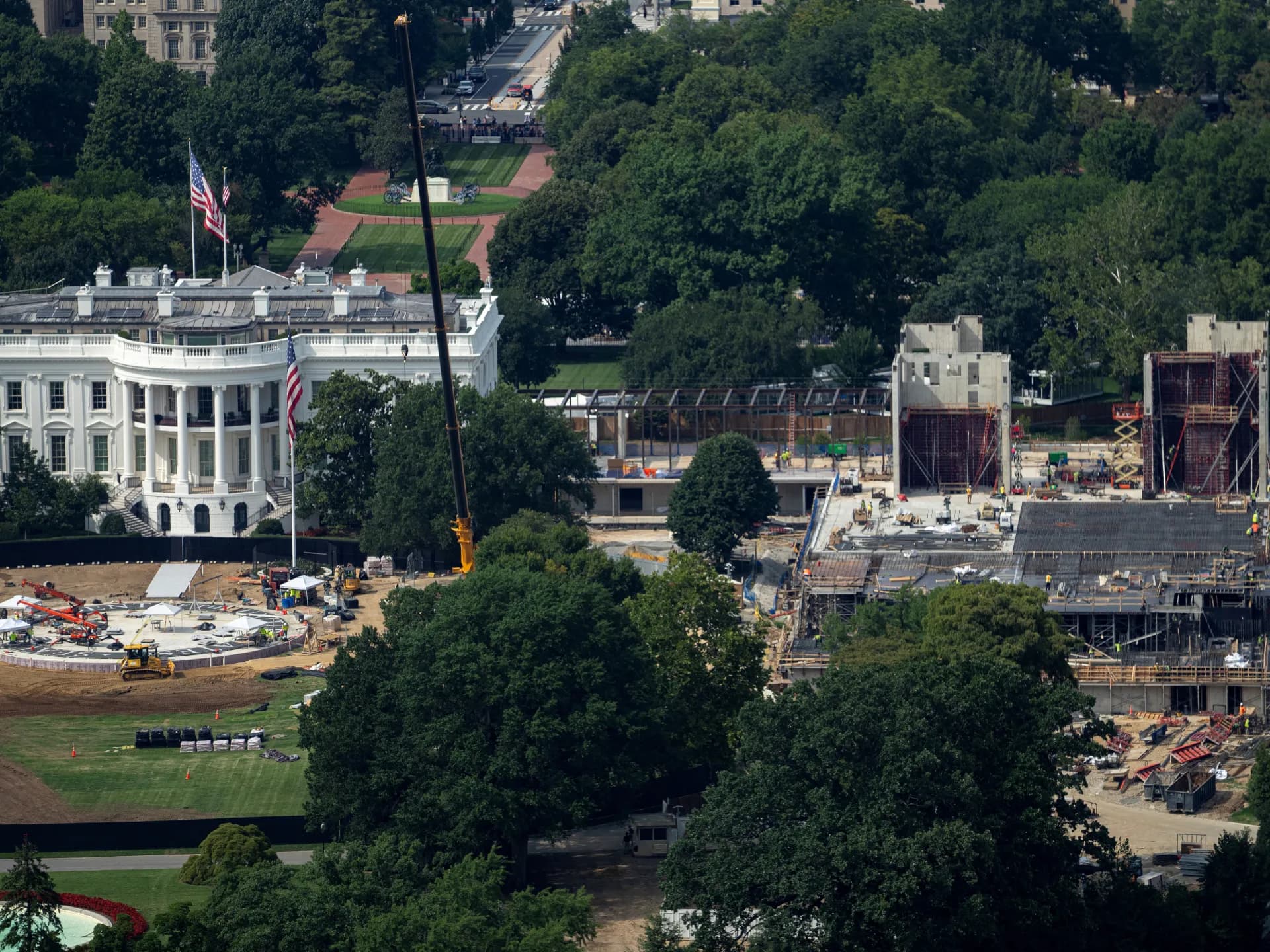
The United States Supreme Court will allow President Donald Trump to continue his $400m White House ballroom project for now, temporarily pausing a judicial order that would halt much of the development.
US Chief Justice John Roberts signed a temporary order on Friday allowing work to proceed while the court considers an emergency appeal from the Trump administration.
Lower courts had ordered a halt to the $400m project, finding that it must have congressional approval. That ruling was set to take effect on Friday. Roberts signed the order because he oversees appeals of cases based in the Washington, DC, area.
The case comes before the nation’s highest court as Trump, a Republican, seeks to expand presidential power and mould the capital in his own image.
The Trump administration has scored a series of victories on the high court’s emergency docket, though the justices have ruled against some of the president’s signature policies after fuller review.
The court skews conservative, with six justices appointed by right-wing presidents, compared to three named by left-leaning leaders.
A long-sought goal
Trump’s ambitions to construct a White House ballroom predate even his first term in office.
The Republican leader reportedly approached the administration of former President Barack Obama about such a construction as far back as 2010.
But since returning to the presidency for a second term in 2025, Trump has taken a more aggressive approach to pursuing construction and renovation projects in Washington, DC.
His administration has argued that the president has total authority to renovate the White House and other federal buildings as he sees fit.
In October, he demolished the century-old East Wing of the White House to make room for the ballroom, with no advance notice to the public.
While the Trump administration has argued in recent court filings that the ballroom must be completed due to national security concerns, his initial plans did not emphasise safety.
Rather, Trump had touted the need for additional space to hold state dinners and other events. The new ballroom structure is expected to measure roughly 8,400 square metres (90,000 square feet), dwarfing the White House’s main building.
Trump also said the project would be funded by private donations, though critics have pointed out that the administration has sought taxpayer funds, as well.
A lengthy legal fight
In December, the National Trust for Historic Preservation filed a lawsuit to stop the ballroom’s construction, arguing that Trump has no unilateral authority to undertake the work.
Lawyers for the preservation group accused the White House of trying to “outrun the courts” by accelerating construction in recent months, despite injunctions to pause the work.
The Trump administration has argued that 65 percent of work has already been completed.
Crews are working 20 hours a day, seven days a week on the project, US Department of Justice lawyers said in court documents. About $200m in private donations have also been spent or committed to the project, they added.
In April, US district court judge Richard Leon, who was appointed under Republican President George W Bush, ordered a stop to aboveground construction on the ballroom.
He emphasised that the president is “not the owner” of the White House and that such dramatic change should require congressional approval.
Leon did, however, include a carve-out to allow necessary construction to proceed if it ensured “the safety and security of the White House”. Below the ballroom, work is under way to create a multi-storey bunker that would house a hospital and military facilities.
Earlier this month, a majority on a three-judge appeals court panel upheld Leon’s injunction.
“Whether or not a massive ballroom should be constructed is for Congress to decide and is not a matter for Executive self-help,” two judges, both appointed by Democrats, ruled.
A third judge, appointed by Trump, said that the National Trust for Historic Preservation had no legal right to sue and called the court’s injunction a “blatant abuse of discretion”.
The appeals court ruling, however, was paused for 14 days to allow the Trump administration to petition the Supreme Court. That two-week window would have come to a close on Friday.













Great article! This really puts things into perspective. I appreciate the thorough research and balanced viewpoint.
Interesting read, though I think there are some points that could have been explored further. Would love to see a follow-up on this topic.
Thanks for sharing this! I had no idea about some of these details. Definitely bookmarking this for future reference.
Well written and informative. The examples provided really help illustrate the main points effectively.
This is exactly what I was looking for! Clear, concise, and very helpful. Keep up the excellent work!