


Get you up to speed: Russia says no plague cases in Siberia after US Embassy releases warning | News World
A lab worker named Daria Shipilova, 28, died of pneumonia of unknown origin at an anti-plague research institute in Irkutsk, Russia. Russian health authorities confirmed that no other cases of plague have been detected among staff, and nearly 200 individuals who had contact with Shipilova are under medical observation, with none showing signs of illness.
The Irkutsk Anti-Plague Research Institute is currently under partial lockdown as staff face accommodation challenges with limited sleeping arrangements. Nearly 200 individuals who were in contact with lab worker Daria Shipilova have been monitored for symptoms, with approximately 60% of them already released from medical observation.
Russia’s health watchdog has reassured the public that no other cases of plague have been detected in Siberia, urging citizens to follow local health guidance and report any symptoms. In response to the situation, the US Embassy has issued a Level 4 Travel Advisory, advising American citizens to leave Russia immediately due to security concerns.
What remains unclear — It is not confirmed whether Daria Shipilova died from pneumonic plague or another cause, despite reports of her symptoms.
Russia reports no new plague cases in Siberia following lab worker’s death

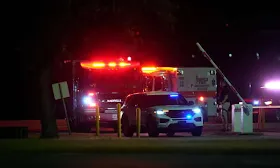
No infectious diseases have been reported amongst other staff (Picture: The Irkutsk Anti-Plague Research)
Russia has said no other cases of plague have been detected amongst anyone in Siberia after a lab worker died last week.
The country’s health watchdog said no infectious diseases have been reported among staff at the plague institute in Irkutsk.
It added that further testing of the dead lab worker’s body found no ‘microorganisms’ in her that were linked to her work.
Despite reassuring statements from Russian authorities, the US Embassy urged American citizens in Russia to ‘depart immediately’.
‘The State Department’s Level 4 Travel Advisory (Do Not Travel) for Russia remains in place and states U.S. citizens currently in Russia should depart immediately,’ the consulate wrote.
‘U.S. citizens planning travel to Russia are again strongly advised not to travel to Russia due to risk of wrongful detention and security concerns.’
Sign up for all of the latest stories

Russia’s health watchdog said the public should not worry (Picture: AFP)
Citizens in the Irkutsk area have been urged to follow the guidance of local health authorities, avoid affected facilities, and seek medical care promptly if they develop fever or respiratory symptoms.
If a US citizen travelled to Irkutsk, they have been told to monitor their health for 14 days.
On October 1, lab worker Daria Shipilova, 28, died of what Russia’s public health agency has called a ‘pneumonia of unknown origin’.
Shipilova was a researcher at an anti-plague research institute in Irkutsk, which examines high-risk bacterial and viral infections.
Plague lab staff and relatives told Sibir. Realii that the lab is under partial lockdown, with staff sleeping on the floors as there are no beds.
What are the symptoms of the pneumonic plague?
High fevers
Shortness of breath
Shaking chills
Pneumonia, or inflammation of the lungs
Headches
Chest pain
Bloody or watery mucus.
Nearly 200 people who came into contact with Shipilova were placed under medical observation, according to Russia’s REN TV. None have shown signs of illness, and an estimated 60% have now been released.
Shipilova reportedly died of pneumonic plague, which infests the lungs.
The disease is the rarest but most infectious of the three types of plague, all caused by the bacterium Yersinia pestis.
The mortality rate is nearly 100% for pneumonic and septicemic forms and around 60% for bubonic, according to the UK Health Security Agency.
Comment now
Comments
Add WTX as a Preferred Source on Google














Great article! This really puts things into perspective. I appreciate the thorough research and balanced viewpoint.
Interesting read, though I think there are some points that could have been explored further. Would love to see a follow-up on this topic.
Thanks for sharing this! I had no idea about some of these details. Definitely bookmarking this for future reference.
Well written and informative. The examples provided really help illustrate the main points effectively.
This is exactly what I was looking for! Clear, concise, and very helpful. Keep up the excellent work!