


Media Lens: Powerful earthquakes in Venezuela leave dozens dead and hundreds injured
Powerful earthquakes struck Venezuela near Caracas, causing significant devastation. The tremors resulted in multiple casualties and extensive infrastructure damage.
Quick links: What has happened | Status quo | Confirmed facts | Preconceptions | Elisions | One story, four angles | Related links
What has happened
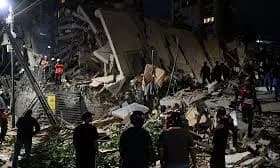
On June 25, 2026, a series of powerful earthquakes struck Venezuela, primarily affecting areas near the capital, Caracas. The seismic events resulted in at least 32 fatalities and approximately 700 injuries, with numerous buildings reported collapsed across the region.
In response to the devastation, Venezuelan President Nicolás Maduro declared a state of emergency. Rescue operations were initiated to assist those trapped under debris, while officials awaited further assessments of the disaster’s impact on infrastructure and public safety.
Status quo
A series of powerful earthquakes struck near Caracas, Venezuela on June 25, 2026. The tremors resulted in significant destruction, with at least 32 fatalities and more than 700 individuals injured. Various buildings collapsed, prompting local authorities to declare a state of emergency. Reports indicate ongoing rescue efforts as authorities assess the extent of the damage throughout the affected areas.
Confirmed facts
- Venezuela experienced powerful earthquakes near Caracas.
- At least 32 people have died and over 700 have been injured due to the earthquakes.
- Dozens of buildings collapsed as a result of the seismic activity.
- The government has declared a state of emergency in response to the situation.
Preconceptions
- CNN prioritizes immediate human impact, emphasizing the number of casualties (dozens killed, hundreds injured) and ongoing updates on rescue efforts, while providing less detail on structural damages.
- The Guardian highlights the broader implications of the earthquake, including detailed reports on building collapses and local responses, while offering less urgency in terms of casualty details compared to others.
- CNBC focuses on international reactions and support measures, particularly from the U.S. government, which is emphasized over the immediate human toll, which is less detailed compared to CNN.
- Reuters discusses the political ramifications, such as state of emergency declarations and government actions, while reducing focus on individual human stories of affected victims seen in other publications.
Elisions
- CNN reports that at least 32 people have died and hundreds are injured due to the earthquakes, while Reuters does not specify a death toll but indicates a declaration of a state of emergency without citing exact figures.
- The Guardian mentions 700 injuries and extensive infrastructure damage, but CNBC primarily focuses on the U.S. response and does not provide detailed casualty figures or damage reports.
- While both CNN and The Guardian highlight the impact on buildings in urban areas, CNBC emphasizes political reactions and international aid, which is not discussed in the other sources.
One story, four angles
CNN – Live updates: Back-to-back earthquakes in Venezuela kill dozens and injure hundreds
Publication: CNN | Intensity: (8/10) | Sentiment: -1 | Legal precision: Moderate
Expand
Espresso Shot: The reader’s attention is immediately drawn to the casualty figures, specifically “dozens dead” and “hundreds injured,” stressing the urgency of the situation.
Key differences:
- Comparison: CNN emphasizes immediate loss of life “dozens and injure hundreds,” while The Guardian opts for a specific “at least 32 dead.” Example: CNN’s phrasing evokes urgency, contrasting with the more exact numbers in The Guardian.
- Comparison: CNN’s use of “live updates” suggests ongoing coverage, while CNBC presents a decisive response from Trump, framing the U.S. action as central. Example: CNN’s format promotes immediacy.
- Comparison: CNN utilizes third-party witness accounts within its narrative, whereas Reuters leans heavily on official statements. Example: CNN’s personal stories enhance emotional engagement.
Bias: Selection: Focuses on immediate death toll; Language: Uses emotionally charged phrases like “dozens dead”; Omission: Lacks context about the country’s previous earthquake preparedness measures.
Assessment: The reader believes the situation is dire and constantly evolving.
The Guardian – Venezuela earthquakes leave at least 32 dead, 700 injured and dozens of buildings collapsed – latest updates
Publication: The Guardian | Intensity: (7/10) | Sentiment: -1 | Legal precision: High
Expand
Espresso Shot: The headline immediately focuses on the specific number of fatalities and injuries, suggesting the article will provide detailed accounts.
Key differences:
- Comparison: The Guardian provides a precise count “32 dead” compared to CNN’s vague “dozens.” Example: The Guardian’s specificity offers a clearer picture of the disaster’s severity.
- Comparison: The Guardian discusses structural damage extensively, which CNN only mentions briefly. Example: “dozens of buildings collapsed” contrasts with CNN’s focus on lives lost.
- Comparison: While CNN emphasizes a narrative style, The Guardian integrates statistics persistently throughout. Example: The Guardian embeds numbers within the narrative as a continual reference point.
Bias: Selection: Chooses specific numbers likely to attract attention; Language: Uses terms like “collapsed” to add urgency; Omission: Fails to highlight personal stories from victims.
Assessment: The reader believes structural damage is significant in addition to the loss of life.
CNBC – Trump pledges rapid U.S. response for Venezuela after historic earthquakes kill dozens
Publication: CNBC | Intensity: (6/10) | Sentiment: +1 | Legal precision: Moderate
Expand
Espresso Shot: The headline emphasizes a governmental response, implying that political action is pivotal in the aftermath of the disaster.
Key differences:
- Comparison: CNBC highlights a political response from the U.S., while other outlets focus primarily on casualties. Example: “Trump pledges rapid U.S. response” underscores U.S. involvement over local impact.
- Comparison: While other publications focus on immediate effects, CNBC ties it to foreign policy implications. Example: The emphasis on “U.S. response” connects it to international perspectives.
- Comparison: CNBC’s language is less emotive, focusing on actions rather than human stories. Example: Use of “pledges” downgrades emotional impact compared to CNN’s narrative framing.
Bias: Selection: Prioritizes U.S. governmental action over local immediate needs; Language: Uses formal tone distancing readers from emotional impact; Omission: Lacks victim narratives that provide human context to the story.
Assessment: The reader perceives the focus on political response rather than immediate human suffering.
Reuters – Venezuela’s Rodriguez declares state of emergency after earthquake, does not give figure of dead
Publication: Reuters | Intensity: (5/10) | Sentiment: -1 | Legal precision: High
Expand
Espresso Shot: Focuses immediately on political implications, indicating a state of emergency as a sign of urgency but lacks specific casualty figures, leading to a more restrained tone.
Key differences:
- Comparison: Reuters emphasizes governmental measures over human loss compared to CNN and The Guardian. Example: “state of emergency” is central to Reuters, diluting focus on immediate casualties.
- Comparison: Lack of casualty figures in Reuters contrasts with the specificity offered by The Guardian. Example: The Guardian’s mention of “32 dead” heightens urgency.
- Comparison: The language in Reuters is formal and legalistic, while other outlets provide personal narratives. Example: Reuters opts for “declares” instead of emotionally charged verbs.
Bias: Selection: Focuses on political ramifications; Language: Uses formal language that may distance readers; Omission: Neglects personal accounts of survivors.
Assessment: The reader believes the focus is heavily skewed toward political urgency, sidelining the human impact of the disaster.
The articles present varied framing of the earthquake in Venezuela. CNN emphasizes human tragedy with urgent updates on casualties, thus adopting a strong human-interest angle. The Guardian offers detailed injury and damage statistics, leaning towards a more analytical perspective. Conversely, CNBC escalates the narrative by discussing potential political responses, framing the event within the context of U.S. intervention. Reuters, meanwhile, focuses on the government’s lack of concrete casualty figures, which may evoke skepticism. Still, the strongest framing belongs to CNN, while CNBC’s choices escalate tensions. The facts do not change. What changes is where scrutiny lands.
Related links
CNN
Live updates: Back-to-back earthquakes in Venezuela kill dozens and injure hundreds
The Guardian
CNBC
Trump pledges rapid U.S. response for Venezuela after historic earthquakes kill dozens
Reuters
Venezuela’s Rodriguez declares state of emergency after earthquake, does not give figure of dead













Great article! This really puts things into perspective. I appreciate the thorough research and balanced viewpoint.
Interesting read, though I think there are some points that could have been explored further. Would love to see a follow-up on this topic.
Thanks for sharing this! I had no idea about some of these details. Definitely bookmarking this for future reference.
Well written and informative. The examples provided really help illustrate the main points effectively.
This is exactly what I was looking for! Clear, concise, and very helpful. Keep up the excellent work!