

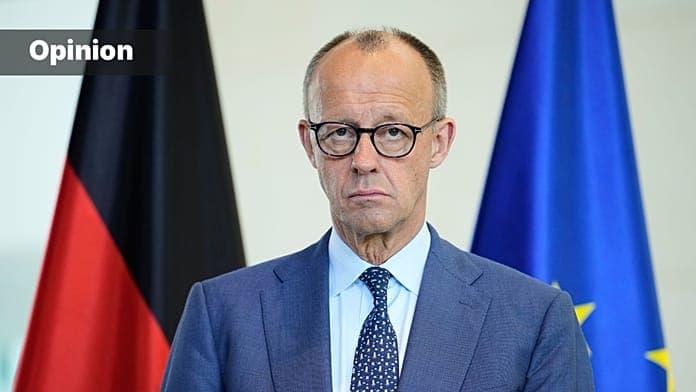
Germany faces historic low as trust wanes under Merz’s government
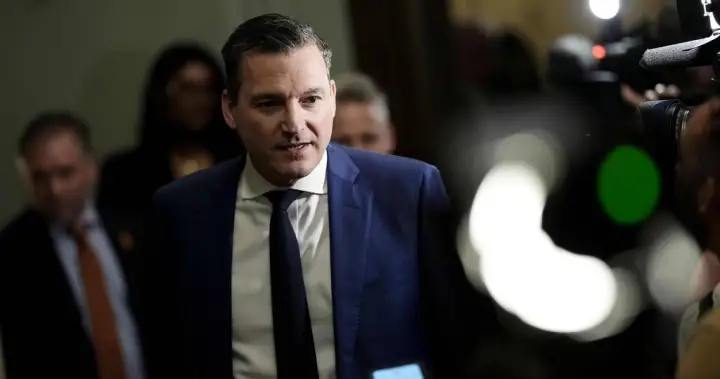
Germany’s current coalition government led by Friedrich Merz is facing significant challenges, with indications of drifting towards a historic low point.
Germany’s diminished international standing, falling behind smaller nations in trust and credibility, threatens not only its own recovery but also the stability and influence of the entire European Union.
“It is time for a decisive turnaround; a strong Germany must renew itself to provide momentum for Europe,” stated Friedrich Merz.
Opinion: Germany in intensive care – a danger for all of Europe
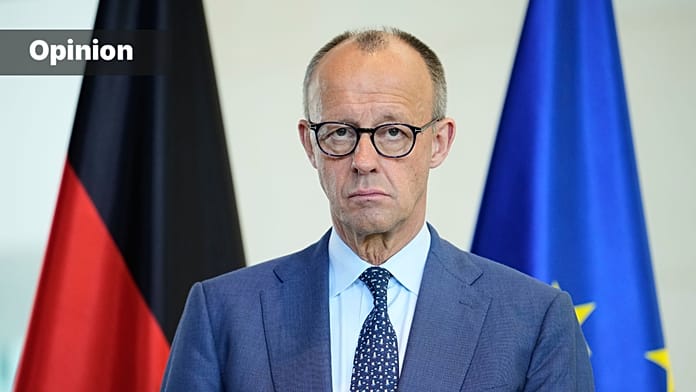
After 16 years of Angela Merkel, marked by major policy mistakes in energy, economic, and migration policy, followed by three disastrous years of a dysfunctional coalition under Olaf Scholz, Friedrich Merz’s government is now drifting towards a historic low point.
Germans might still find ways to rationalise the fact that the international community placed more trust in much smaller countries such as Portugal and Austria than in Germany, Europe’s leading power. Portugal has many friends around the world, enjoys considerable goodwill in Africa, and the UN Secretary-General is Portuguese. But the fact that neighbouring Austria has received significantly more votes is both a humiliation and a reality check.
Germany has evidently lost trust and squandered credibility. Politically, it is no longer taken seriously. Economically, it is increasingly seen as a declining power. Praise is now largely confined to its past achievements, as “Made in Germany” is increasingly associated with high costs and inefficiency. Germany has become an old-people’s home and a museum for a world that no longer exists. Yet it should be the engine driving Europe’s future.
If Germany cannot get back on its feet, the EU itself will be in danger
Is that fair?
As a proud German and European, I find the next sentence difficult to write: yes, it is fair. Worse, Germany has brought this upon itself.
For too long, politics has allowed itself to be driven by ideological projects that were either hostile to future prosperity or simply irrelevant. Conservatives, in many cases, transformed themselves into progressives and thereby made themselves politically redundant.
Europe already has plenty of parties on the left. As a result, the vital balance between pragmatism and ambition, between preserving and reforming – qualities once found across the political spectrum – has been lost.
Today, the stakes go far beyond the next parliamentary vote, salary increases for politicians, bans on combustion engines, or debates about gender identity. As of now, Germany’s future is inseparable from Europe’s future.
If Germany cannot get back on its feet, the European Union itself will be in danger. There is a reason why one often hears in Brussels, sometimes joking**,** sometimes with genuine concern: the EU exists as long as Germany pays.
It is therefore time for a decisive turnaround.
Values only have influence if supported by power
In a world of growing competition, economic strength, technological sovereignty, and political effectiveness matter. Values remain important, but they only have influence when supported by power. The fuel for this turnaround is simple: pragmatism instead of ideology.
This will not be achieved through speeches or moral appeals, one of Western Europe’s least attractive habits. Leadership emerges from economic strength, political credibility, and the ability to solve problems.
Four areas are particularly important for this mission of reinvention:
First, Germany must regain its economic competitiveness. High energy costs, excessive bureaucracy, slow digitalisation, and insufficient investment have weakened Europe’s largest economy.
A strong Europe requires a strong Germany.
Peace and stability can no longer be taken for granted
Second, Germany must rebuild its defence capabilities and assume greater responsibility for Europe’s security. Geopolitical realities have changed. Peace and stability can no longer be taken for granted. Europe needs credible deterrence and strategic capability.
Whether it’s wise to aim for the German armed forces, the Bundeswehr, to become “the strongest conventional army in Europe” by 2039 – exactly one hundred years after Nazi Germany’s invasion of Poland – is open to debate. Yet, it at least resembles a plan.
Migration must be managed more effectively
Third, Germany must manage migration more effectively. Humanity and order are not contradictions. A country that fails to secure its borders, rarely deports illegal migrants, and loses control over irregular immigration will not be taken seriously. Secure borders, functioning asylum systems, and successful integration are prerequisites for social cohesion and trust in the democratic rule of law.
Fourth, Germany must once again become a center of innovation. artificial intelligence, digital infrastructure, advanced manufacturing, scientific research, and new energy technologies will determine the prosperity of future generations.
Europe cannot continue falling behind the United States and China. A nation that once excelled in education and invention but no longer hosts a world-class university, has slipped in international education rankings, wins few major scientific prizes, no longer sets global standards, burdens research with regulation, overregulates AI, abandons nuclear research, turns away from combustion-engine innovation, and rejects advances in genetics will struggle to compete with the world’s most innovative countries.
Europe needs a strong, reliable Germany
To be clear: this is not an argument for German dominance.
What Europe needs is a Germany that is reliable, strong, and capable of acting. A partner for peace and prosperity. If Germany renews itself, it can once again provide momentum for Europe. If it fails, it will become far more difficult for the entire continent to preserve prosperity, security, and influence.
The good news is: it is never too late – one just has to begin.
In 1648, the Peace of Westphalia was concluded, ending the Thirty Years’ War, which had devastated – and in many regions of Central Europe even depopulated – Germany in particular. The treaty marked the end of the war through a pan-European peace congress and became the starting point of modern European diplomacy.
In 1945, Germany and Europe lay in ruins. What followed was reconstruction, reconciliation, and the building of European cooperation. Prosperity and progress emerged.
In 1990, the Cold War ended. German reunification followed, the Iron Curtain dividing Europe disappeared, and for most Europeans this once again meant democratisation, reconstruction, and the further development of Europe for the benefit of all.
Now, a new beginning for Germany and Europe must take place. Not tomorrow, now.
There are two paths out of intensive care: one leads back to life, the other to hospice. (end-of-life care)
Chancellor Merz will have a decisive influence on which direction Germany – and Europe – goes. He can enter be remembered in history books as the doctor who saved the patient, or as the gravedigger.









Great article! This really puts things into perspective. I appreciate the thorough research and balanced viewpoint.
Interesting read, though I think there are some points that could have been explored further. Would love to see a follow-up on this topic.
Thanks for sharing this! I had no idea about some of these details. Definitely bookmarking this for future reference.
Well written and informative. The examples provided really help illustrate the main points effectively.
This is exactly what I was looking for! Clear, concise, and very helpful. Keep up the excellent work!