

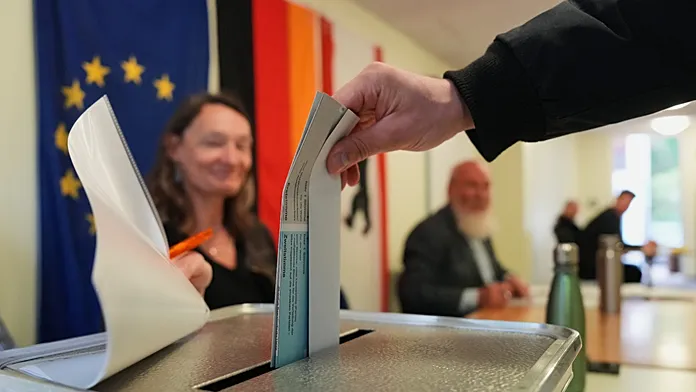
Germans vote in state elections that could affect chancellor’s future
Germans will vote on Sunday in state elections in Berlin and Mecklenburg–Western Pomerania, with polls showing Die Linke and the AfD leading their respective races.
These elections impact Chancellor Friedrich Merz’s leadership, with the CDU facing potential significant losses against both Die Linke and the AfD, influencing Germany’s political landscape.
“Maybe then Friedrich Merz will be gone,” remarked Moritz Lembke-Oezer, expressing his hope for the CDU to be “punished” in the upcoming elections.
Germans head to the polls in state elections as pressure mounts on Merz
Published on
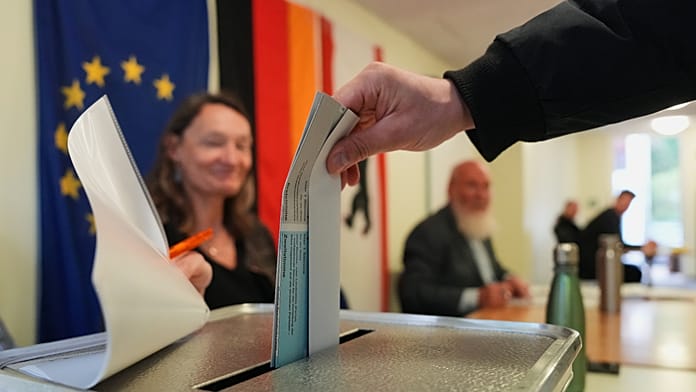
Germans are heading to the polls on Sunday in two state elections that could prove decisive for Chancellor Friedrich Merz’s future.
In Berlin, Merz’s ruling Christian Democratic Union (CDU) is facing a close fight against Die Linke, which has strong support among young people and has pledged measures to tackle the housing crisis.
In the coastal state of Mecklenburg–Western Pomerania in northeastern Germany, the main race is between the Social Democratic Party (SPD) and the hard-right, anti-immigration Alternative for Germany (AfD).
The AfD comes into Sunday’s vote fresh off the back of its election success in Saxony-Anhalt earlier this month and will be hoping for further gains.
However, the party faces a sterner test in “MeckPomm,” where it will come up against the SPD’s Manuela Schwesig, who has served as minister-president of the state since 2017.
The latest polling figures show Die Linke edging ahead of the CDU in the city-state of Berlin, while the AfD leads the SPD in Mecklenburg–Western Pomerania – with the CDU flirting with the 5% hurdle required to remain in state parliament.
Gains for the far-right or far-left would heap pressure on Merz, who became chancellor in May 2025 and has seen his popularity continue to decline.
Moritz Lembke-Oezer, 43, summed up that feeling while speaking to the AFP news agency outside a polling station to the south of Berlin, saying that while he feared the vote could benefit the AfD, he hoped it would see the CDU “punished.”
“Maybe then Friedrich Merz will be gone,” he said, adding that he planned to vote for Die Linke because of the far-left party’s vows to address the housing issue.
Speaking to AFP outside a polling station in Schwerin, the state capital of Mecklenburg-Western Pomerania, pensioner Peter Sommer added: “I’d be in favour of the AfD winning, because then they’ll have to prove themselves: either something will happen, or it’ll be the last time they get any votes.”
Additional sources • AFP














Great article! This really puts things into perspective. I appreciate the thorough research and balanced viewpoint.
Interesting read, though I think there are some points that could have been explored further. Would love to see a follow-up on this topic.
Thanks for sharing this! I had no idea about some of these details. Definitely bookmarking this for future reference.
Well written and informative. The examples provided really help illustrate the main points effectively.
This is exactly what I was looking for! Clear, concise, and very helpful. Keep up the excellent work!