


What’s the Latest: After election victory, Chow to face budget pressure and new deal with Ontario
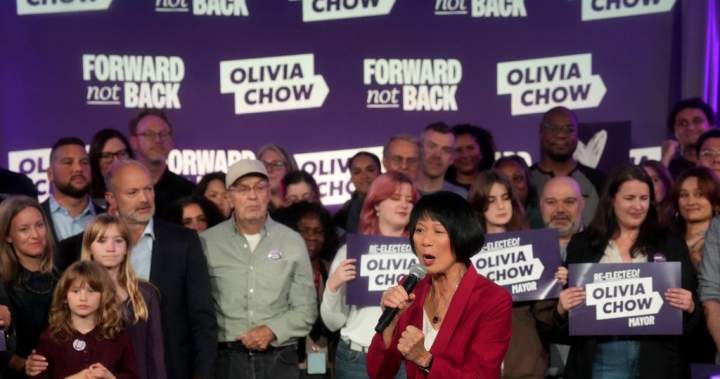
Olivia Chow has been re-elected as mayor of Toronto, defeating challenger Brad Bradford. Following her victory, she pledged to address the city’s budget pressures and continue her progressive agenda, while confirming she is negotiating for new financial assistance from the provincial government.
Olivia Chow is negotiating with the province to secure additional budget support for Toronto, aiming to address an estimated $1.1 billion shortfall by 2027. Chow’s previous 2023 funding deal, which provided $1.2 billion in operating cash, is set to expire this year.
Premier Doug Ford congratulated Olivia Chow on her electoral victory and expressed a willingness to collaborate to enhance the economy and safeguard communities. Chow faces a significant budget challenge, with the city estimating a shortfall of approximately £1.1 billion by 2027, alongside a need to negotiate new financial assistance from the province.
What remains unclear — It is uncertain how Chow will address the anticipated $1.1 billion budget shortfall by 2027.
Chow faces budget challenges and provincial negotiations after election win
Olivia Chow has secured re-election as mayor of Toronto, defeating challenger Brad Bradford. Following her victory, Chow outlined her commitment to being “the mayor for everyone” while facing significant budgetary challenges for the city. Central to her agenda are initiatives such as free school lunches and a weekly transit fare cap.
Chow’s re-election comes amidst ongoing negotiations with the provincial government regarding budgetary support. Her previous agreement, which provided the city with $1.2 billion in operating funds, is set to expire this year. The city has projected a budget shortfall of approximately $1.1 billion for 2027, a situation Chow has described as urgent. She has pledged to maintain property tax increases at or near the rate of inflation.
Premier Doug Ford congratulated Chow on her win and expressed his willingness to collaborate with her. “I will work with anyone to drive the economy to make sure we protect communities and companies and people from U.S. tariffs,” he stated, highlighting a commitment to addressing regional economic concerns.
In her first statements post-election, Chow addressed questions about whether this term would be her last, affirming her intention to dedicate “every moment” over the next four years to serving the residents of Toronto. Her focus remains on implementing her progressive policies, even as fiscal pressures loom.
This victory not only confirms Chow’s leadership but also sets the stage for critical negotiations with provincial authorities essential for the city’s financial stability.









Great article! This really puts things into perspective. I appreciate the thorough research and balanced viewpoint.
Interesting read, though I think there are some points that could have been explored further. Would love to see a follow-up on this topic.
Thanks for sharing this! I had no idea about some of these details. Definitely bookmarking this for future reference.
Well written and informative. The examples provided really help illustrate the main points effectively.
This is exactly what I was looking for! Clear, concise, and very helpful. Keep up the excellent work!