


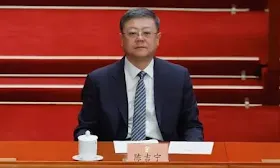
Media Lens: China’s Shanghai party chief Chen Jining investigated amid anti-corruption campaign
China’s Politburo member and Shanghai party chief Chen Jining faces an investigation amid heightened scrutiny. The investigation reflects ongoing anti-corruption efforts led by Xi Jinping within the Chinese political landscape.
Quick links: What has happened | Status quo | Confirmed facts | Preconceptions | Elisions | One story, four angles | Related links
What has happened
China’s anti-corruption campaign has led to the investigation of Chen Jining, the rising star and Shanghai party chief. The investigation is part of a broader effort initiated by President Xi Jinping aimed at reinforcing party loyalty and maintaining discipline within the government.
In response to the investigation, leaders in Shanghai have publicly pledged their allegiance to Beijing. This reflects the ongoing emphasis on loyalty within the Communist Party amid scrutiny and purges of officials deemed untrustworthy.
Status quo
China’s anti-corruption campaign has recently intensified, notably affecting high-ranking officials. Chen Jining, the Shanghai party chief and a member of the Politburo, is under investigation as part of this ongoing effort led by Xi Jinping’s administration. This marks a significant development in the broader context of political accountability within China’s leadership structure.
Confirmed facts
- Chen Jining, the Shanghai party chief, is under investigation as part of Xi Jinping’s anti-corruption campaign.
- The Shanghai leadership has pledged loyalty to Beijing amid the investigation of Chen Jining.
- Chen Jining is a member of China’s Politburo.
- Multiple sources, including BBC, Reuters, and NPR, report on the investigation of Chen Jining.
Preconceptions
- BBC prioritizes human interest aspects and personal stories surrounding the anti-corruption campaign, while reducing technical details regarding the political implications.
- Reuters emphasizes formal statements from government officials and the procedural aspects of the investigation, whereas it downplays the public reactions or societal impacts related to the leadership changes.
- NPR highlights the broader context of political rivalries within China, emphasizing the implications for Xi Jinping’s power dynamics, while minimizing individual anecdotes about the affected officials.
- The Economist focuses on the economic and strategic implications of the political purges, especially regarding future governance in Shanghai, while offering less detail on public sentiment or local reactions.
Elisions
- BBC discusses the impact of Xi Jinping’s anti-corruption campaign on Chen Jining’s political career, focusing on the immediate consequences within the Shanghai party landscape, while Reuters reports on the broader implications of loyalty pledges from Shanghai leadership post-investigation, missing the specifics of Chen’s ties to ongoing corruption allegations.
- NPR emphasizes the investigation into Chen Jining as a significant move against a prominent Politburo member but lacks details on the reactions from other political factions within China, which are outlined in The Economist’s coverage of the purging from Xi’s team, providing a more comprehensive view of the political fallout.
- Reuters provides a narrative on the Shanghai leadership’s pledges to Beijing, whereas NPR’s article centers exclusively on the specifics surrounding Chen Jining’s investigation, lacking context about the potential implications for Shanghai’s governance structure that The Economist elaborates on regarding future leadership dynamics.
One story, four angles
BBC – China: Xi Jinping’s anti-corruption campaign ensnares rising star and Shanghai party chief Chen Jining
Publication: BBC | Intensity: (7/10) | Sentiment: Neutral | Legal precision: Moderate
Expand
Espresso Shot: The headline directs attention to the implications of Chen Jining’s involvement within larger anti-corruption efforts by Xi Jinping, hinting at potential political repercussions.
Key differences:
1. **Focus on Consequences:** BBC emphasizes the consequences of the anti-corruption campaign—“ensnares”—implying a trap set by Xi Jinping.
2. **Headline Structure:** The headline structure prioritizes Xi Jinping’s initiative, making it a focal point rather than the individual involved.
3. **Language Choice:** The term “rising star” alongside “anti-corruption campaign” highlights stark contrasts in political reputations, inviting intrigue.
Bias: Selection: The focus is on the individual’s downfall rather than systemic issues; Language: The word “ensnares” casts a negative connotation on the political climate; Omission: Lacks broader context on potential public reactions to the campaign.
Assessment: Readers may initially believe that the anti-corruption campaign has veered into a personal attack on rising officials.
Reuters – Shanghai leadership pledges loyalty to Beijing as top official faces investigation
Publication: Reuters | Intensity: (6/10) | Sentiment: Neutral | Legal precision: Moderate
Expand
Espresso Shot: The focus on loyalty suggests potential shifts in power dynamics within the Shanghai leadership, hinting at broader political implications.
Key differences:
1. **Loyalty Theme:** Reuters’ headline emphasizes “loyalty,” suggesting an important political allegiance that may be tested.
2. **Causal Structure:** The phrase “faces investigation” places immediate risk on the official, contrasting with BBC’s framing of personal downfall within broader anti-corruption themes.
3. **Tone of Urgency:** The use of “pledges loyalty” imparts a sense of urgency and necessity to bond with Beijing, reflecting an adaptation to potential fallout.
Bias: Selection: Focuses on loyalty instead of the systemic corruption issues; Language: “Pledges” creates a sense of immediate obligation, possibly suggesting fear; Omission: Does not explore public or internal responses to leadership loyalty.
Assessment: Readers might first interpret loyalty as a survival tactic in a politically charged environment.
NPR – China investigates Politburo member and Shanghai party chief Chen Jining
Publication: NPR | Intensity: (5/10) | Sentiment: Neutral | Legal precision: Moderate
Expand
Espresso Shot: The title emphasizes direct actions taken against key political figures, suggesting a more aggressive stance towards governance and accountability.
Key differences:
1. **Directness of Investigation:** NPR plainly states that an investigation is underway, suggesting transparency in governance action compared to others’ framing.
2. **Focus on the Politburo:** Highlighting “Politburo member” indicates a higher echelon of politics being scrutinized, thus intensifying the gravity of the investigation.
3. **Lack of Emotional Language:** NPR avoids emotive terms like “ensnares,” opting for straightforward reporting that lacks intrinsic bias but provides crucial clarity.
Bias: Selection: Chooses a more neutral stance without detailed implications; Language: Delivers facts rather than connotations, which may appear less engaging; Omission: Lacks the broader implications for Shanghai or Xi Jinping’s influence.
Assessment: Readers may initially perceive this as an open investigation rather than a critique of leadership or potential fallout.
The Economist – Shanghai’s boss is purged from Xi Jinping’s top team
Publication: The Economist | Intensity: (8/10) | Sentiment: Negative | Legal precision: High
Expand
Espresso Shot: The wording “purged” indicates a severe action that evokes strong imagery of political elimination and instability, directing readers to consider implications on governance.
Key differences:
1. **Term “Purged”:** The choice of verb suggests definitive removal and drastic measures unlike the more neutral language found in other outlets.
2. **Emphasis on Instability:** The phrase “from Xi Jinping’s top team” highlights potential fragmentation within top leadership structures, enhancing concerns about stability.
3. **High-Impact Language:** The phrasing invokes a strong emotional response compared to the others that may present milder tones leading to various interpretations.
Bias: Selection: Focuses solely on the act of purging, which emphasizes drama over broader contexts; Language: “Purged” conveys a harsh political reality; Omission: Misses potential insights into public or party responses to changes.
Assessment: Readers likely perceive an alarming shift in political dynamics suggesting significant threats to current governance structures.
The BBC presents a moderate framing of Xi Jinping’s anti-corruption campaign by highlighting the impact on a prominent party chief without excessive dramatization. Reuters, however, emphasizes political loyalty and suggests an intense atmosphere surrounding the investigation, which heightens the stakes and tension within China’s political landscape. Meanwhile, NPR focuses on the broad implications of the investigation, intensifying the scenario. The Economist adopts the most escalatory framing, describing the situation as a purging, implying a dangerous escalation in Xi’s consolidation of power. The facts do not change. What changes is where scrutiny lands.
Related links
BBC
Reuters
Shanghai leadership pledges loyalty to Beijing as top official faces investigation
NPR
China investigates Politburo member and Shanghai party chief Chen Jining














Great article! This really puts things into perspective. I appreciate the thorough research and balanced viewpoint.
Interesting read, though I think there are some points that could have been explored further. Would love to see a follow-up on this topic.
Thanks for sharing this! I had no idea about some of these details. Definitely bookmarking this for future reference.
Well written and informative. The examples provided really help illustrate the main points effectively.
This is exactly what I was looking for! Clear, concise, and very helpful. Keep up the excellent work!