


Media Lens: Canadian Wildfire Smoke Spreads Across Northeast and Great Lakes Regions
Canadian wildfire smoke spreads across the US.
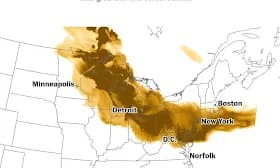
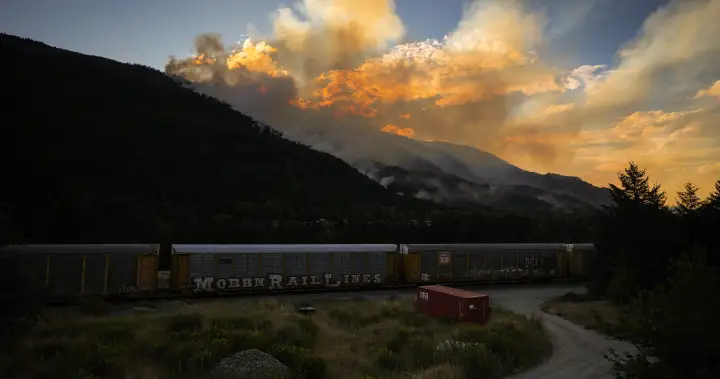
Canadian wildfire smoke is spreading across the US, affecting air quality. Dangerous smoke is expected to worsen in the Northeast and Mid-Atlantic through Friday, according to coverage in latest US news and US and global politics.
What happened
Canadian wildfire smoke is spreading across the United States, impacting air quality levels. The smoke is expected to worsen particularly in the Northeast and Mid-Atlantic regions through Friday.
Experts have issued warnings about the dangerous levels of smoke affecting the Great Lakes area. A First Alert Weather Day has been declared due to anticipated poor air quality resulting from the wildfire smoke.
Key facts
- Canadian wildfire smoke is spreading across the US.
- The Northeast and Mid-Atlantic regions are expected to experience worsening air quality due to this smoke.
- Warnings have been issued for poor air quality conditions in various areas.
- The smoke from the wildfires is reaching the Great Lakes region.
Where coverage differs
- The Washington Post emphasizes the worsening effects of wildfire smoke in specific regions, while CNN highlights the dangers posed by the smoke moving into populated areas.
- The New York Times foregrounds ongoing updates on air quality indices, rather than the immediate health concerns raised by WTVG.
- WTVG prioritizes the impact of poor air quality on local weather forecasts over the broader implications discussed by The New York Times.
One story, four angles
The Washington Post – Wildfire smoke will worsen in the Northeast and Mid-Atlantic through Friday
Publication: The Washington Post | Primary framing pattern: Consequence | Tone: Urgent | Intensity: 7/10 | Sentiment: Negative | Legal precision: Moderate
Expand
Espresso Shot: This article emphasizes the worsening air quality due to Canadian wildfire smoke moving into the Northeast and Mid-Atlantic regions. It provides forecasts and implications for public health.
Publication emphasis: The focus is on the immediate adverse effects of wildfire smoke on air quality and public health.
Framing analysis: The piece foregrounds the urgent need to respond to deteriorating air quality, whereas socioeconomic impacts are mentioned but not prioritized.
Bias: Selection: The article highlights official forecasts and health warnings. Language: Uses terms like “worsen” to convey severity. Omission: Less focus on local governmental measures being taken.
Assessment: The article effectively communicates the urgency of the situation without delving into potential solutions or wider implications.
CNN – Dangerous smoke from Canadian wildfires moves into the Great Lakes and Northeast
Publication: CNN | Primary framing pattern: Consequence | Tone: Alarmist | Intensity: 8/10 | Sentiment: Negative | Legal precision: High
Expand
Espresso Shot: CNN’s reporting emphasizes the health risks and dangerous conditions resulting from smoke spreading from Canadian wildfires, with specific effects on different regions highlighted.
Publication emphasis: The article prioritizes health risks due to air quality issues brought about by the wildfire smoke.
Framing analysis: The danger to human health and safety is foregrounded, while broader environmental impacts are less emphasized.
Bias: Selection: Utilizes expert opinions and health warnings from officials. Language: Employs strong terms like “dangerous” and “risk.” Omission: Lacks specific governmental response details.
Assessment: The piece conveys a strong sense of urgency, effectively alerting readers to the potential health impacts of wildfire smoke.
The New York Times – Wildfire Smoke: Maps and Live Updates on Air Quality Index in U.S. Cities and Canada
Publication: The New York Times | Primary framing pattern: Policy | Tone: Informative | Intensity: 6/10 | Sentiment: Neutral | Legal precision: High
Expand
Espresso Shot: This article provides resources like maps and real-time updates on air quality due to wildfire smoke, placing emphasis on delivering clear information to the public.
Publication emphasis: Focuses on practical resources regarding air quality rather than sensationalizing the event.
Framing analysis: Foregrounds actionable information and resources for the public, with secondary emphasis on the event itself.
Bias: Selection: Prioritizes factual mapping and air quality data. Language: Maintains a straightforward and clear tone. Omission: Lacks in-depth analysis of health implications.
Assessment: The article effectively serves as a resource while remaining detached from emotional appeals, ensuring clarity and accessibility.
WTVG – 13 First Alert Weather Day issued for Thursday: Poor air quality expected from wildfire smoke
Publication: WTVG | Primary framing pattern: Policy | Tone: Cautionary | Intensity: 6/10 | Sentiment: Negative | Legal precision: Moderate
Expand
Espresso Shot: This report outlines the issuance of a First Alert Weather Day cautioning viewers about expected poor air quality due to wildfire smoke, offering practical recommendations.
Publication emphasis: Highlights the proactive measures necessary for public safety amid deteriorating air quality.
Framing analysis: Prioritizes guidance for audience safety while providing context on air quality issues, downplaying any panic.
Bias: Selection: Focuses on public safety announcements and forecasts. Language: Cautious and informative. Omission: Less focus on the broader context of climate change or wildfire causes.
Assessment: The coverage effectively informs the public while addressing safety measures, but less emphasis is placed on underlying causes or long-term implications.
Food for thought
While The Washington Post frames Canadian wildfire smoke dispersing through the U.S. as a deteriorating health issue, focusing on immediate air quality impacts, CNN escalates the narrative by labeling the smoke as “dangerous” and highlighting specific regions affected, raising urgency. Meanwhile, the New York Times adopts a legal framing by discussing ongoing governmental responses and public health advisories, placing emphasis on accountability for climate change impacts. WTVG maintains a localized perspective, urging residents to take precautions with a weather alert. Thus, the comparative weight lies in the Post’s strong health focus, while CNN’s language incites alarm. The facts do not change. What changes is where scrutiny lands.










Great article! This really puts things into perspective. I appreciate the thorough research and balanced viewpoint.
Interesting read, though I think there are some points that could have been explored further. Would love to see a follow-up on this topic.
Thanks for sharing this! I had no idea about some of these details. Definitely bookmarking this for future reference.
Well written and informative. The examples provided really help illustrate the main points effectively.
This is exactly what I was looking for! Clear, concise, and very helpful. Keep up the excellent work!