

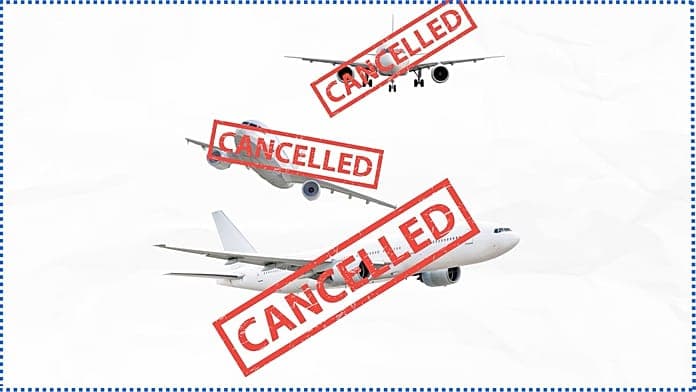
Airlines cancel thousands of flights as EU faces jet fuel shortages
Scandinavian Airlines has cancelled about a thousand departures, while Lufthansa has axed 20,000 routes due to rising jet fuel prices amid global disruption.
Europe faces a pressing situation, with the International Energy Agency indicating a mere six weeks of jet fuel supply remain amid escalating prices and significant cancellations.
“The European Commission maintains that flight cancellations stem from airlines’ profitability issues, not fuel shortages,” a spokesperson stated amid rising concerns over jet fuel supplies.
Key developments
Scandinavian Airlines has cancelled approximately a thousand departures, while Lufthansa has axed 20,000 routes in response to escalating jet fuel prices and supply concerns.
The European Commission asserts that these cancellations stem from airline profitability issues rather than fuel shortages, even as it launches AccelerateEU to secure emergency fuel supplies.
Watch: Why the fuel crisis might ground your summer vacation flights?

Published on
While the European Commission tones down warnings from energy experts, the airlines are telling a different story.
Scandinavian Airlines has cancelled about a thousand departures; Lufthansa has followed suit by axing 20,000 routes, and Air France-KLM is slapping a €100 surcharge on long-distance tickets.
EU refineries account for roughly 70% of the 27-member bloc’s jet fuel, with the rest usually imported from the Middle East. However, with the Strait of Hormuz closed, the disruption to global oil transit drove jet fuel prices to twice their previous levels.
Last week, the International Energy Agency warned that Europe has roughly six weeks of supply left, which could lead to flight cancellations.
The European Commission argues that flight cancellations are not related to shortages but rather to the airlines’ own lack of profitability.
However, to be on the safe side, it launched AccelerateEU, a plan to coordinate emergency fuel supplies and ensure member states start sharing what’s left in their tanks.
The EU is also eyeing new imports from the US. However, US jet fuel follows slightly different chemical standards.
The European Commission is trying to keep Europeans calm, but the advice from EU transport ministers — who gathered ahead of this week’s summit in Cyprus — is a bit of a climb: they are suggesting Europeans ‘neutralise demand’ by switching to public transport and electric bikes.
It is a noble idea, but you cannot exactly ride an e-bike from Brussels to Ibiza, can you?
The energy crisis debate is likely to be held today and tomorrow at an informal summit of EU leaders in Cyprus. I just wonder how they plan to get there.
Watch the EU News video in the player above for the full story.








Great article! This really puts things into perspective. I appreciate the thorough research and balanced viewpoint.
Interesting read, though I think there are some points that could have been explored further. Would love to see a follow-up on this topic.
Thanks for sharing this! I had no idea about some of these details. Definitely bookmarking this for future reference.
Well written and informative. The examples provided really help illustrate the main points effectively.
This is exactly what I was looking for! Clear, concise, and very helpful. Keep up the excellent work!