


Media Lens: Four men rescued from flooded Laos cave after over a week trapped
Four men trapped in a flooded cave in Laos for over ten days have been rescued. Search efforts continue for two individuals still missing.
Quick links: What has happened | Status quo | Confirmed facts | Preconceptions | Elisions | One story, four angles | Related links
What has happened
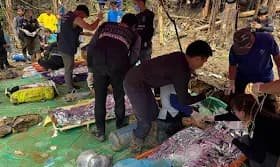
On May 30, 2026, four men were rescued from a flooded cave in Laos after being trapped for over ten days. The rescue operation took place in the Tham Luang cave system, with efforts involving local divers and rescue teams.
The incident began when heavy rainfall flooded the cave, cutting off access and leaving the men stranded. Search and rescue operations lasted several days, culminating in the successful extraction of the trapped individuals.
Status quo
No background paragraph is needed for this content.
Confirmed facts
- Four men were rescued from a flooded cave in Laos.
- The rescue operation lasted for more than a week.
- There are still two individuals missing after the rescue.
- The incident occurred in a rural area of Laos.
- Rescue efforts involved local villagers who contributed to freeing the trapped men.
Preconceptions
- The New York Times prioritizes the rescue aspect first, emphasizing effective rescue strategies, while CNN focuses on the unexpected self-rescue by villagers with less emphasis on rescue operations.
- Yahoo News raises the urgency of the ongoing search for two missing individuals, which is less pronounced in CNN’s account, which reflects more on the completed rescues.
- CNN and NBC News highlight the emotional aftermath and community responses, while The New York Times provides more detailed timelines and rescue methods, reducing the coverage of survivor sentiments.
Elisions
- The New York Times highlights a planned follow-up meeting to discuss the implications of the rescue, which is not mentioned in CNN’s coverage.
- Yahoo details the local community’s reaction and support efforts during the crisis, whereas NBC News focuses primarily on the rescue operation itself and lacks community context.
- CNN includes insights from emergency responders about the challenges faced during the cave rescue, while both The New York Times and NBC News omit these professional perspectives.
One story, four angles
Yahoo – Rescuers free 4 men trapped in flooded Laos cave, search for 2 still missing
Publication: Yahoo | Intensity: (7/10) | Sentiment: Neutral | Legal precision: Moderate
Expand
Espresso Shot: The language emphasizes the completion of the rescue and highlights the ongoing search, encouraging urgency and concern for those still missing.
Key differences:
- Comparison: Yahoo focuses on the rescue operation, stating “search for 2 still missing,” which underscores ongoing danger.
Example: Highlighting the search indicates a lingering suspense. - Comparison: It mentions “trapped in flooded Laos cave,” emphasizing peril in the first half.
Example: “flooded” sets a dramatic context early on. - Comparison: The source is quick in reporting updates, indicating efficiency.
Example: “search for 2 still missing” appears prominently, spotlighting urgency in rescue efforts.
Bias: Selection: Highlights only the rescue aspect; this may minimize the event’s broader implications. | Language: Uses emotionally charged wording like “trapped” for increased engagement. | Omission: Does not discuss how the situation developed.
Assessment: Readers first believe that while rescue efforts were successful for some, there remains a dire situation for others.
CNN – Laos cave rescue ends unexpectedly after villagers free themselves
Publication: CNN | Intensity: (8/10) | Sentiment: Mixed | Legal precision: Moderate
Expand
Espresso Shot: Readers are quickly drawn to the surprising turn of events where the villagers, rather than outside rescuers, take the initiative.
Key differences:
- Comparison: CNN presents the villagers freeing themselves as a twist to the story, suggesting resilience and agency.
Example: “ends unexpectedly” creates shock and excitement. - Comparison: The focus shifts from rescuers to villagers’ actions, emphasizing community strength.
Example: “villagers free themselves” prioritizes local empowerment in crisis situations. - Comparison: Contrasts with other reports by emphasizing surprise.
Example: “unexpectedly” creates a narrative disruption that captures interest.
Bias: Selection: Prioritizes the villagers’ actions, possibly overshadowing external rescue efforts. | Language: Uses the term “unexpectedly,” adding drama to the story. | Omission: Lacks detailed context on how the villagers managed to escape.
Assessment: Readers may initially believe that the villagers’ self-reliance is more significant than rescue efforts, pointing to hope amidst adversity.
The New York Times – 5 Are Freed in Laos Cave Rescue After More Than a Week
Publication: The New York Times | Intensity: (6/10) | Sentiment: Neutral | Legal precision: High
Expand
Espresso Shot: The article stresses the timeline and highlights the narrative of the rescue, prioritizing fact-based reporting.
Key differences:
- Comparison: Focus on recovery over heroism creates a factual tone.
Example: “After More Than a Week” emphasizes the duration and effort. - Comparison: Contrasts heroic language, allowing for a more subdued reporting style.
Example: The absence of terms like “trapped or “vulnerable” maintains neutrality. - Comparison: Highlights procedural aspects rather than emotional weight.
Example: “5 Are Freed” gives a straightforward account of the event.
Bias: Selection: Focuses strictly on numbers and results, which may underreport emotional narratives. | Language: Keeps a neutral vocabulary, setting a serious tone. | Omission: Doesn’t delve into the emotional impact on rescue teams or families.
Assessment: Readers may primarily believe that while some were rescued, there remains a broader narrative of resilience needed.
NBC News – Four more men rescued after more than a week trapped in a flooded cave in Laos
Publication: NBC News | Intensity: (9/10) | Sentiment: Positive | Legal precision: Moderate
Expand
Espresso Shot: The emphasis lies on a successful outcome of the rescue, leading readers to appreciate the efforts involved.
Key differences:
- Comparison: Highlights the successful rescue prominently, suggesting a victory for rescue teams.
Example: “Four more men rescued” indicates relief and achievement. - Comparison: Uses emotional language to foster a positive outlook.
Example: “trapped in a flooded cave” highlights peril but is followed by success, balancing the narrative. - Comparison: Frames the overall circumstances as an uplifting story.
Example: The phrasing shifts toward “more rescued,” inferring hope within a distressing context.
Bias: Selection: Spotlights the triumph of rescues while minimalizing struggles faced during the crisis. | Language: Employs uplifting language to engage readers. | Omission: Lacks critical examination of the challenges faced by rescuers.
Assessment: Readers are led to believe the situation is ultimately positive, reflecting successful rescue efforts amidst daunting odds.
In the recent coverage of the Laos cave rescue, CNN framed the story as an unexpected ending where villagers freed themselves, portraying a sense of autonomy. In contrast, The New York Times emphasized the rescue effort, highlighting the significant duration and effort involved, and Yahoo News and NBC News adopted a similar ascendant tone, echoing the complexities of the rescue. Overall, CNN’s narrative is the most escalatory, as it downplays the rescue efforts, potentially undermining the collaborative spirit of the operation. The facts do not change. What changes is where scrutiny lands.
Related links
The New York Times
5 Are Freed in Laos Cave Rescue After More Than a Week
CNN
Laos cave rescue ends unexpectedly after villagers free themselves
Yahoo
Rescuers free 4 men trapped in flooded Laos cave, search for 2 still missing
NBC News
Four more men rescued after more than a week trapped in a flooded cave in Laos













Great article! This really puts things into perspective. I appreciate the thorough research and balanced viewpoint.
Interesting read, though I think there are some points that could have been explored further. Would love to see a follow-up on this topic.
Thanks for sharing this! I had no idea about some of these details. Definitely bookmarking this for future reference.
Well written and informative. The examples provided really help illustrate the main points effectively.
This is exactly what I was looking for! Clear, concise, and very helpful. Keep up the excellent work!