


Woman’s mid-air birth leads to complex legal dilemmas
Mid-air birth
A passenger on a Caribbean Airlines flight from Jamaica to the US gave birth during final approach to John F Kennedy International Airport.
Officials are reviewing the birth’s legal status to determine if the newborn qualifies for US citizenship under the 14th Amendment, depending on the flight’s airspace during delivery.
Brad Bernstein notes the baby’s citizenship hinges on the aircraft’s location in the sky at the moment of birth during the flight from Jamaica to the US.
Briefing summary
A Caribbean Airlines flight from Jamaica to New York City witnessed a passenger giving birth during its final approach. Both the mother and newborn received immediate medical care upon landing.
The airline commended its crew’s professionalism in managing the situation effectively, confirming that no emergency was declared. Legal implications regarding the baby’s citizenship have arisen, depending on the flight’s location during birth.
Full reading: Woman’s birth in mid-air creates tricky legal situation | US News
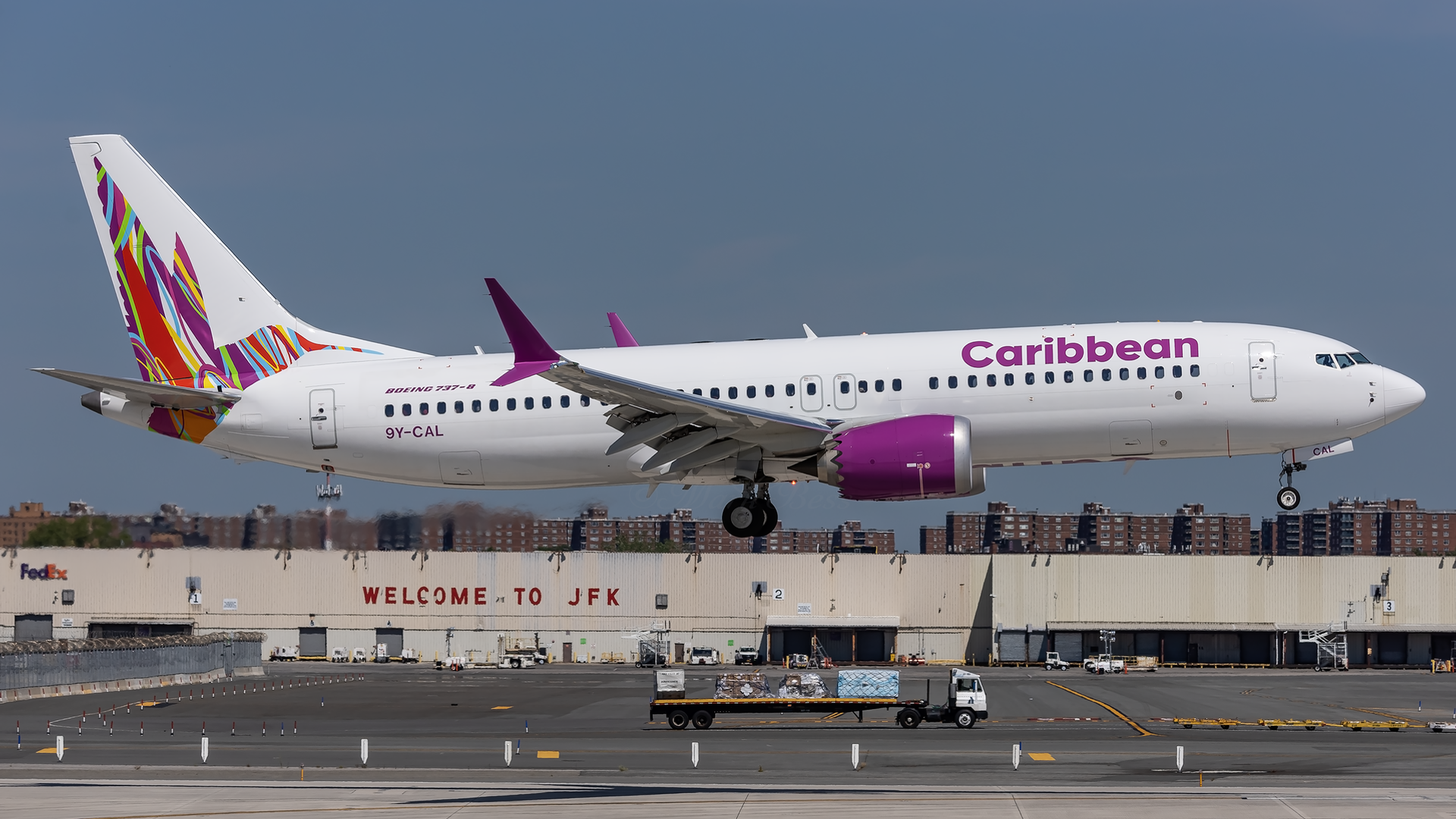
A passenger flying from Jamaica to the US has given birth in mid-air.
She went into labour as the Caribbean Airlines flight was on its final approach from Kingston to New York City.
Both the mother and newborn received medical attention when the plane touched down.
One air traffic controller quipped the baby should be called “Kennedy” because the flight had landed at John F Kennedy International Airport.
Caribbean Airlines said in a statement: “The airline comments the professionalism and measured response of its crew, who managed the situation in accordance with established procedures, ensuring the safety and comfort of all onboard.”
A spokesperson went on to confirm that an emergency was not declared.
Such incidents are exceedingly rare, with figures from the National Library of Medicine suggesting just 74 infants were born on flights between 1929 and 2018. Of those, 71 survived the delivery.
Caribbean Airlines allows pregnant passengers to fly without medical clearance until the end of their 32nd week, and prohibits travel after the 35th week.
Brad Bernstein, an immigration lawyer, says the birth creates some pretty interesting legal questions.
In a video on his YouTube page, he explained: “Now the big question is… is that baby a US citizen?
“Here’s the answer – depends on one thing: where exactly that plane was in the sky at the moment of birth.
“If the baby was born in US airspace, then under the 14th Amendment and State Department regulations, that child is automatically a US citizen.
“But if the baby was born even a few minutes earlier outside of the United States airspace, not a US citizen.”


Great article! This really puts things into perspective. I appreciate the thorough research and balanced viewpoint.
Interesting read, though I think there are some points that could have been explored further. Would love to see a follow-up on this topic.
Thanks for sharing this! I had no idea about some of these details. Definitely bookmarking this for future reference.
Well written and informative. The examples provided really help illustrate the main points effectively.
This is exactly what I was looking for! Clear, concise, and very helpful. Keep up the excellent work!