


Get you up to speed: US and Iran declare fragile ceasefire amid ongoing tensions and strikes
The US and Iran reached a fragile ceasefire, with both nations claiming victory despite ongoing strikes. However, key issues remain unresolved, including Iran’s rights to nuclear enrichment and access to the Strait of Hormuz.
The fragile ceasefire is facing significant challenges, with key issues unresolved, including Iran’s rights to nuclear enrichment, as highlighted by Dr Katayoun Shahandeh from SOAS, University of London. Furthermore, Dr Bamo Nouri from the University of West London noted that if the ceasefire breaks, the US is likely to escalate military pressure and restore deterrence, which could lead to renewed strikes.
Iran claims to have retained control over the Strait of Hormuz, which remains outside the normal operational capacity despite claims of reopening. Dr Nouri emphasises that for the ceasefire to endure, clear written terms must be established, encompassing geographical coverage, definitions of violation, and compliance verification mechanisms.
How strong is the US-Iran ceasefire – and has it already fallen apart? | News World
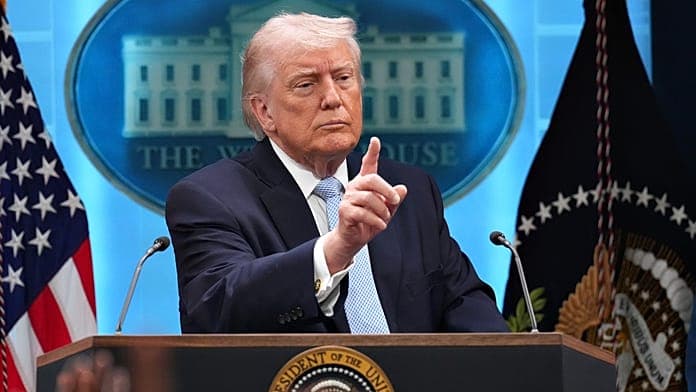
 Donald Trump, Mojtaba Khamenei and Benjamin Netanyahu imposed over images of wreckage from strikes.” decoding=”sync”/>
The ceasefire between the US, Israel and Iran is in a tough spot (Pictures: Getty/Reuters/AP)
The US and Iran both claimed victory after reaching a fragile ceasefire, even as more drones and missiles hit Iran and Gulf Arab countries yesterday.
The US president said he would suspend his threats to end an ‘entire civilisation’ if Iran agreed to reopen the critical Strait of Hormuz waterway, and a tentative ceasefire was then reached.
Yet, the agreement is already hitting roadblocks. Iran appears to have closed the Strait of Hormuz, after US leaders claimed it had been reopened as part of the ceasefire.
Key issues for both nations remain unresolved, including the scope of the truce, Iran’s rights to nuclear enrichment and ballistic missiles, as well as access to the Strait of Hormuz.
Dr Katayoun Shahandeh, of SOAS, University of London, told WTX the ceasefire is more fragile than it is secure.
‘It may hold in the very short term because all sides have reasons to pause, but it is not yet a stable settlement,’ she said.
Sign up for all of the latest stories
Why did Israel attack Lebanon, and is it a breach of the ceasefire?

182 people were killed yesterday in Lebanon by Israeli strikes (Picture: AFP)
The elephant in the room is the continued Israeli strikes into Lebanon.
Israel has intensified attacks in Lebanon, killing at least 182 people in the highest single-day death toll in the Israel-Hezbollah war, according to Lebanon’s health ministry.
‘There seem to be conflicting messages over whether Lebanon is covered, which is exactly the kind of ambiguity that can unravel a deal fast. There is also a growing divergence between U.S. and Israeli objectives,’ Dr Shahandeh said.
Washington has declared the ceasefire as a ‘victory’, Dr Shahandeh said, but Israel’s current posture points towards a continued military campaign, rather than a diplomatic resolution.
‘There is a real fear that this is not peace so much as a pause, as it is a chance for Washington and its allies to regroup and, if talks fail, strike harder. That may not be the stated intention, but it is one plausible reading of a ceasefire whose terms remain contested and whose basic points of agreement still seem very far apart,’ she said.
‘Already, it does not look as though all sides are fully adhering to it.’
What happens if the ceasefire conditions are broken?

Only two vessels have travelled through the Strait (Picture: Getty)
If the ceasefire is broken, Trump would have a few options – but would likely begin with escalation in strikes and potentially putting US troops on the ground in Iran.
‘Trump has said U.S. military ships and aircraft will remain around Iran and that if Tehran does not comply, the “shootin’ starts” again,’ Dr Shahandeh explained.
‘The most likely U.S. response would be renewed strikes, more coercive pressure over Hormuz, and an attempt to force Iran into harsher terms from a position of overwhelming military superiority. But that would deepen the bind he is already in: walking away risks looking weak, while escalating further risks a more unpopular and expensive war.’
Dr Bamo Nouri, senior lecturer in International Relations at the University of West London, told WTX: ‘If it breaks, Trump has already signalled a return to coercive escalation – maintaining US forces in the region, increasing military pressure, and potentially authorising further strikes to restore deterrence.
Iran’s options if the ceasefire is broken are different. Despite sustaining heavy damage, the country has retained power over the Strait of Hormuz and could easily resume missile and drone attacks and pressure on global shipping.

Israeli strikes have continued to pummel Lebanon and raised questions of whether Israel violated the truce (Picture: Reuters)
As for Israel, the option is to continue its air strikes in both Iran and Lebanon if it believes the ceasefire to be broken.
‘Israel, for its part, is likely to be the least patient actor, having already signalled readiness to resume high-intensity operations if it judges the ceasefire to be constraining its strategic objectives,’ Dr Nouri said.
Despite agreeing to suspend its bombing campaign in Iran, the US and Israel differ on their positions as to whether the ceasefire stretches to Lebanon, where Israel argues it is striking Iranian-backed Hezbollah groups.
‘Israel agreed to suspend its bombing campaign on Iran, but that U.S. and Israeli positions differ sharply from Iran’s (and Pakistan who brokered the deal) over whether Lebanon is part of the ceasefire framework.
‘That means Israel could become the most immediate trigger for collapse if it continues treating other theatres as separate while Iran treats them as linked,’ Dr Shahandeh said.
What happens next?

The most likely U.S. response to breaking the ceasefire would be renewed strikes (Picture: Getty)
It’s hard to say. Iran, Israel and the United States are not operating from a shared understanding of what’s been agreed in the ceasefire agreement.
Dr Nouri explained: ‘The US frames it around limiting Iran’s nuclear activity and securing maritime stability in the Strait of Hormuz, while Iran insists on its enrichment rights and links the deal to broader regional conditions, including Israeli operations in Lebanon.’
In order for the ceasefire to hold, the three countries must quickly clarify terms to stop any misunderstandings.
‘Without a quickly accepted framework, this ceasefire becomes a short-lived bargaining interval rather than a stable resolution, with all sides already preparing for renewed escalation,’ Dr Nouri said.
Dr Shahandeh believes three things need to happen for the ceasefire to hold.
‘The parties need clear written terms, not just public declarations: what is covered geographically, what counts as a violation, and who verifies compliance,’ she said.
‘Second, there has to be a practical de-escalation mechanism around Hormuz, because Reuters reports there is still little sign that the Strait is operating normally, and Iran is still asserting control there.
‘Third, the ceasefire must become a political process, not just a pause in bombing. The ceasefire can hold, but only as a bridge to a more detailed agreement. If it remains vague, it is unlikely to last.’
Comment now
Comments
Add WTX as a Preferred Source on Google









Great article! This really puts things into perspective. I appreciate the thorough research and balanced viewpoint.
Interesting read, though I think there are some points that could have been explored further. Would love to see a follow-up on this topic.
Thanks for sharing this! I had no idea about some of these details. Definitely bookmarking this for future reference.
Well written and informative. The examples provided really help illustrate the main points effectively.
This is exactly what I was looking for! Clear, concise, and very helpful. Keep up the excellent work!