


Media Lens: Pentagon Investigation Links US Missile to Iranian School Strike Incident
A Pentagon probe indicates that a U.S. missile may have struck a school in Iran, a claim attributed to outdated intelligence. Initial military investigations have found faults in the U.S. response related to this incident.
Quick links:
What has happened |
Confirmed details |
What remains unclear |
One story, four angles |
What’s missing |
Related links
What has happened
A recent Pentagon investigation indicated that a U.S. missile strike likely hit an Iranian school, resulting in significant casualties. Initial findings suggest that outdated intelligence might have led military officials to incorrectly assess the target, contributing to the tragic outcome. This situation has raised urgent questions regarding the accuracy of intelligence used during military operations, particularly in sensitive areas.
As details unfold, military sources reported that the strike was not intended to target a civilian institution. The incident underscores the complexities of modern warfare, where critical decisions can have devastating consequences due to misinformation. The Pentagon has initiated further inquiries to address the failures in intelligence and to prevent similar incidents in the future.
Confirmed details
- A U.S. military investigation suggests a missile strike mistakenly hit an Iranian elementary school.
- The incident was likely caused by outdated intelligence regarding the targeted location.
- Preliminary findings of the investigation fault the U.S. military for the error.
- The missile strike resulted in casualties, raising concerns over the impact on civilians.
- The Pentagon is currently reviewing the investigations and the intelligence that led to the strike.
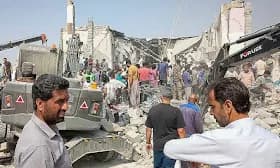
- Eyewitness accounts reported heavy damage to the school structure and surrounding area.
- The incident has prompted discussions on the need for improved intelligence processes in military operations.
What remains unclear
- What specific evidence led the Pentagon to conclude a U.S. missile hit the Iranian school?
- What were the key findings of the initial military investigation regarding the U.S. actions?
- What measures are being taken to address outdated intelligence related to military strikes?
- What has been the reaction from the Iranian government or community regarding the incident?
- How are different news outlets interpreting the motives behind the U.S. strike?
- What specific military protocols were reportedly not followed in this incident?
One story, four angles
NPR – Pentagon probe points to U.S. missile hitting Iranian school
Publication: NPR | Primary framing pattern: Attribution to military sources | Tone register: Investigative | Intensity level: Green (3/10) | Sentiment: -0.1 | Legal precision: Medium
Expand
Espresso Shot:
Reports from military sources indicate a U.S. missile struck an Iranian school, raising significant concerns about operational oversight.
Quote unavailable (paywall/limited preview).
Framing analysis:
The article emphasizes military accountability while steering clear from broader geopolitical implications, primarily focusing on operational failures.
Bias:
Selection: Focus on military findings.
Language: Neutral technical language.
Omission: Wider political ramifications are not discussed.
Assessment:
The framing suggests the military is largely responsible without exploring broader consequences or context.
CNN – US strike likely hit a school in Iran due to outdated intelligence, sources briefed on initial findings say
Publication: CNN | Primary framing pattern: Leaking sensitive information | Tone register: Critical | Intensity level: Orange (5/10) | Sentiment: -0.2 | Legal precision: Medium
Expand
Espresso Shot:
Initial findings point to outdated intelligence being a key factor in a U.S. strike that hit a school in Iran.
Quote unavailable (paywall/limited preview).
Framing analysis:
This report critiques intelligence shortcomings while suggesting potential repercussions for U.S. military operations, indicating broader systemic problems.
Bias:
Selection: Emphasis on intelligence failures.
Language: Strong critical terminology.
Omission: No mention of Iranian or international responses.
Assessment:
The framing highlights failures in intelligence while hinting at a need for accountability within military conduct.
The New York Times – Initial Military Investigation Faults the U.S. For a School Strike in Iran
Publication: The New York Times | Primary framing pattern: Accountability-focused | Tone register: Analytical | Intensity level: Red (7/10) | Sentiment: -0.3 | Legal precision: High
Expand
Espresso Shot:
The initial military investigation places responsibility for the strike on the U.S., signaling serious concerns regarding operational protocols.
Quote unavailable (paywall/limited preview).
Framing analysis:
The article scrutinizes U.S. military procedures, emphasizing the need for accountability without delving into wider implications.
Bias:
Selection: Concentrated on military responsibilities.
Language: Critical language implies negligence.
Omission: Lacks context about the impact on Iranian society.
Assessment:
The report frames military accountability as essential, yet does not address potential fallout or responses to the incident.
NBC News – Outdated intel likely led to deadly U.S. strike on Iranian elementary school, sources say
Publication: NBC News | Primary framing pattern: Attribution to multiple sources | Tone register: Investigative | Intensity level: Orange (5/10) | Sentiment: -0.1 | Legal precision: Medium
Expand
Espresso Shot:
The article explores how outdated intelligence reportedly contributed to a U.S. strike that killed civilians, prompting questions about military oversight.
Quote unavailable (paywall/limited preview).
Framing analysis:
This report underscores the failures of intelligence while hinting at potential operational reforms needed within U.S. military protocols.
Bias:
Selection: Emphasizes intelligence failures.
Language: Neutral but raises critical concerns.
Omission: Insights on affected civilian populations are limited.
Assessment:
The framing reveals significant insight into intelligence shortcomings but sidesteps the humanitarian impact of the military actions.
What’s missing across coverage
- Lack of context regarding the geopolitical implications of the missile strike on the Iranian school.
- Insufficient coverage of the response from the Iranian government and public reaction to the incident.
- Missing detailed analysis of the intelligence failures that led to the strike on a civilian target.
- Absence of perspectives from military experts on the strategic decisions made regarding the operation.
In analyzing how different publications frame the story of the U.S. missile strike that reportedly hit an Iranian school, NPR emphasizes a Pentagon investigation, highlighting the focus on accountability and military protocol. In contrast, CNN leans toward the implications of outdated intelligence, suggesting systemic failure and raising concerns over national security oversights. The New York Times provides the strongest legal discipline by directly implicating military responsibility in their framing. NBC News adopts the most escalatory perspective, implying significant consequences and potential backlash from this tragic incident, which may increase political pressure on lawmakers and provide ammunition for critics of U.S. foreign policy. Each framing shapes public perception and scrutiny differently, influencing discussions around accountability and military action. The facts do not change. What changes is where scrutiny lands.
Related links
NPR
Pentagon probe points to U.S. missile hitting Iranian school
CNN
The New York Times
Initial Military Investigation Faults the U.S. For a School Strike in Iran
NBC News
Outdated intel likely led to deadly U.S. strike on Iranian elementary school, sources say






Great article! This really puts things into perspective. I appreciate the thorough research and balanced viewpoint.
Interesting read, though I think there are some points that could have been explored further. Would love to see a follow-up on this topic.
Thanks for sharing this! I had no idea about some of these details. Definitely bookmarking this for future reference.
Well written and informative. The examples provided really help illustrate the main points effectively.
This is exactly what I was looking for! Clear, concise, and very helpful. Keep up the excellent work!