

G7 discusses ceasefire plans in Gaza and sanctions on Russia’s fleet
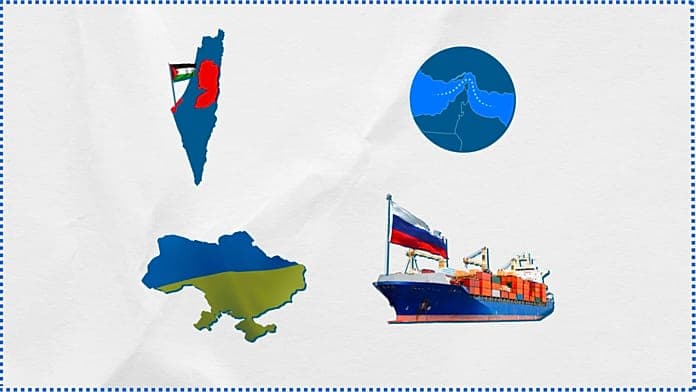
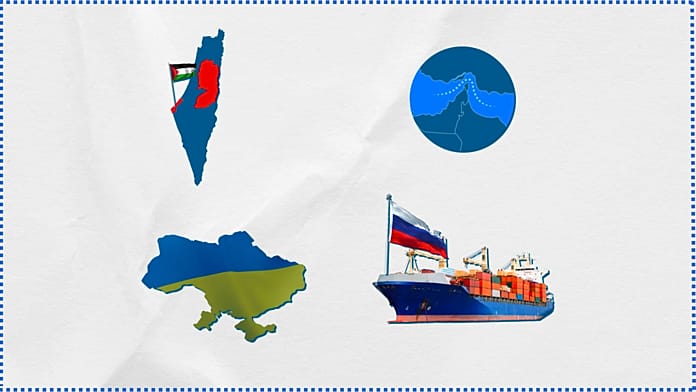
Today, the Group of Seven is discussing ceasefire plans in Gaza, securing maritime passage in the Strait of Hormuz, and sanctions on Russia’s shadow fleet.
The G7’s collective economic stature grants it significant sway over global financial policies, with actions like asset freezes and tax agreements prompting worldwide adaptation.
“The G7’s influence hinges on unity; however, its limited membership may restrict its ability to address global challenges effectively,” stated a diplomatic source.
Key developments
The Group of Seven is discussing plans for a ceasefire in Gaza, enhanced sanctions on Russia’s shadow fleet, and securing maritime passage in the Strait of Hormuz during their current meeting.
The G7, comprising the United States, Canada, France, Germany, Italy, Japan, and the United Kingdom, has historically wielded significant economic influence, yet lacks the capacity to enact binding international laws.
Watch: The G7 Foreign Ministers’ Summit is happening in France – but what it can actually do?
Published on
The Group of Seven is an exclusive, informal club made up of the United States, Canada, France, Germany, Italy, Japan, and the United Kingdom, alongside the EU.
They have immense economic gravity. When the G7 unifies on freezing assets or setting global taxes, the rest of the world listens and usually adapts.
As they meet today, they will discuss ceasefire plans in Gaza, securing maritime passage in the Strait of Hormuz, backing Ukraine and adding more sanctions on Russia’s shadow fleet.
And it feels like history is repeating itself. After all, The G7 was created on France’s initiative following the 1970s oil crisis.
But does it have power? It depends how we define it.
The G7 cannot pass binding international laws, and it has no combined military. Every pledge relies entirely on leaders keeping their promises back home.
And it also faces structural limits. By limiting its membership to traditional Western powers, it might overlook the Global South. The rapid expansion of BRICS, so a coalition of emerging economies, proves the G7 is no longer the only heavyweight in international affairs.
Watch the EU News video in the player above for the full story.






Great article! This really puts things into perspective. I appreciate the thorough research and balanced viewpoint.
Interesting read, though I think there are some points that could have been explored further. Would love to see a follow-up on this topic.
Thanks for sharing this! I had no idea about some of these details. Definitely bookmarking this for future reference.
Well written and informative. The examples provided really help illustrate the main points effectively.
This is exactly what I was looking for! Clear, concise, and very helpful. Keep up the excellent work!