

EU’s six largest economies push for savings and investment union plan
France, Germany, Italy, the Netherlands, Poland, and Spain are pushing to accelerate the Savings and Investment Union amid ongoing disputes from smaller member states.
EU leaders are set to discuss the Savings and Investment Union at next week’s European Council summit, amid concerns from smaller nations about its potential impacts.
Discussions among EU leaders are set to continue during the upcoming European Council summit next week regarding the Savings and Investment Union framework.
Briefing summary
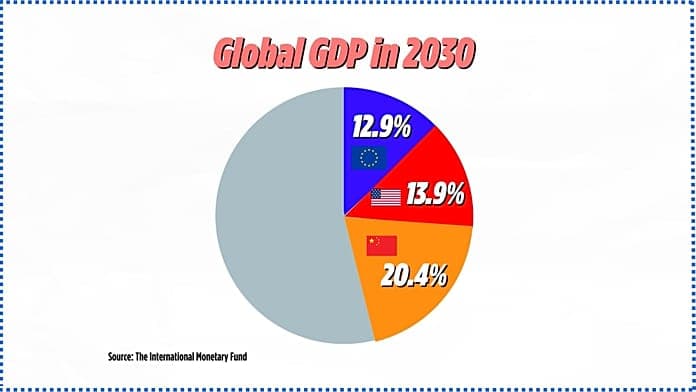
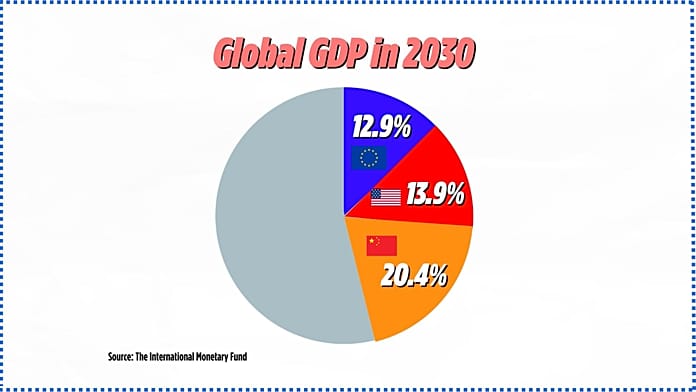
The European Union is projected to account for only 13% of global GDP by 2030, as stated in Enrico Letta’s 2024 report. This highlights the need for deeper integration across the bloc.
In response, France, Germany, Italy, the Netherlands, Poland, and Spain have called for accelerated efforts towards a Savings and Investment Union, aiming to merge Europe’s fragmented financial landscape.
However, disputes among member states regarding the regulatory framework persist, with smaller countries expressing concerns over potential impacts on their national markets, slowing progress on the initiative.
Watch: Money, investment, and union? EU returns to the discussions on being competitive
Published on
Weddings are peculiar events. Some people fixate on what the bride will wear. Your reporter, on the other hand, is obsessed with the wedding cake.
Because, as in the real world, what matters is not only its overall size but also how big a piece you get.
And right now, the EU’s slice of the global wealth cake is shrinking. And to solve it, one proposed solution — the Savings and Investment Union (SIU) — is to finally merge Europe’s fragmented financial landscape into a single, unified market.
Or, in plain English: instead of baking 27 separate cupcakes, Europe wants one giant cake.
The EU will account for only around 13% of the global GDP in 2030, which is below the US and way below China.
Foreseeing this, Enrico Letta’s 2024 report argued Europe needs deeper integration, calling for a shift from 27 regulatory realities to just one.
This strategy aims to mobilise the estimated €10 trillion in European household savings currently sitting in low-interest bank deposits or flowing into Wall Street.
By removing national barriers, the plan channels this money into productive investments, allowing innovative companies to scale up across the bloc without relying solely on bank financing — or moving to Silicon Valley.
And this week, France, Germany, Italy, the Netherlands, Poland and Spain, the six largest economies in the EU, pushed to accelerate this agenda.
But why hasn’t this cake been baked yet? While the recipe might sound good, member states are still arguing over the details. Smaller countries fear the framework could hurt their national markets, and these technical disputes keep slowing the process.
And discussions will continue among EU leaders during the European Council summit next week, so if you are into money, investment, or just baking, stay tuned for more.
Watch the EU News video in the player above for the full story.






Great article! This really puts things into perspective. I appreciate the thorough research and balanced viewpoint.
Interesting read, though I think there are some points that could have been explored further. Would love to see a follow-up on this topic.
Thanks for sharing this! I had no idea about some of these details. Definitely bookmarking this for future reference.
Well written and informative. The examples provided really help illustrate the main points effectively.
This is exactly what I was looking for! Clear, concise, and very helpful. Keep up the excellent work!