

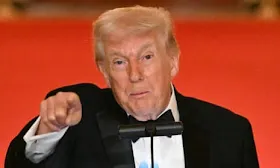
Supreme Court Strikes Down Most of Trump’s Tariffs: Economic Implications Ahead
The U.S. Supreme Court has ruled to invalidate most of former President Donald Trump’s tariffs, a decision that significantly alters the landscape of U.S. trade policy. These tariffs, which had been imposed on various imports, were deemed overreaching by the Court, citing a lack of statutory authority to implement them under the previous administration.
This ruling may have broad implications for American businesses and consumers who have been affected by the increased costs associated with these tariffs. Experts indicate that the reversal could lead to a reduction in higher prices for goods, potentially influencing both the domestic market and international trade relations.
Quick links:
What we know so far |
How US outlets are framing the story |
Additional news sources in the US
What we know so far
The Supreme Court recently ruled to invalidate a significant portion of former President Donald Trump’s tariffs, citing that they were imposed without proper legal authorization. The decision has substantial implications for U.S. trade policy, potentially affecting costs for consumers and businesses that had borne the burden of these tariffs. This ruling is expected to reshape trade relationships and economic strategies moving forward.
In response, trade officials have stated that the U.S. tariff policy remains unchanged despite the Court’s ruling. They emphasized their commitment to overseeing trade practices while continuing to balance national interests and international trade partnerships. This ongoing tension reflects broader considerations surrounding U.S. economic policies and international relations.
Confirmed details
- The Supreme Court invalidated most of Donald Trump’s tariffs.
- The ruling impacts a range of tariffs imposed during his administration.
- Legal challenges were initiated by affected international trade parties.
- The decision is expected to affect U.S. trade relations and economic policies.
- The ruling signals a significant shift in U.S. tariff policy.
- Trade officials maintain that the core U.S. tariff policies remain unchanged.
What remains unclear
- Uncertainty about the implications of the Supreme Court ruling on existing tariffs.
- Lack of clarity regarding future trade policies following the ruling.
- Potential impact on US interest rates remains unspecified.
- Details on how other countries will respond to this ruling are unclear.
- Responses from economic experts on the long-term effects are not provided.
- Specifics about the legal reasoning behind the Supreme Court’s decision are absent.
How US outlets are framing the story
Supreme Court invalidates most of Donald Trump’s tariffs
Publication: CNN | Sentiment: Neutral (0.0) | Framing intensity: 5/10
Presentation: The article outlines the Supreme Court’s decision regarding tariffs imposed by former President Trump, focusing on the legal implications and the court’s rationale. It includes commentary from legal experts and government officials about the ruling’s impact on trade policy.
Angles and emphasis: CNN presents the story with an informative tone, emphasizing procedural aspects and the implications for future trade practices, as well as reactions from key political figures.
Supreme Court conservatives were united against Biden. Here’s why they split against Trump
Publication: The Washington Post | Sentiment: Neutral (0.0) | Framing intensity: 4/10
Presentation: This piece analyzes the contrasting judicial approaches of conservative justices on the Supreme Court, focusing particularly on their decisions involving Biden versus Trump. It includes insights into the dynamics within the court and different judicial philosophies.
Angles and emphasis: The Washington Post focuses on the internal conflicts within the Supreme Court, providing a detailed analysis on judicial decision-making processes, rather than simply reporting on the rulings.
US tariff policy ‘hasn’t changed’ despite supreme court ruling, trade chief says
Publication: The Guardian | Sentiment: Neutral (0.1) | Framing intensity: 3/10
Presentation: This article features statements from trade officials asserting that U.S. tariff policies remain consistent despite the recent Supreme Court ruling. It emphasizes continuity in trade strategy and includes reactions from industry stakeholders.
Angles and emphasis: The Guardian adopts a straightforward approach, reflecting official perspectives while incorporating industry reactions, maintaining a balanced tone without delving into sensationalism.
Opinion | Stand back, Congress needs a second Supreme Court jolt
Publication: The Washington Post | Sentiment: Negative (-0.5) | Framing intensity: 8/10
Presentation: The opinion piece critiques congressional inaction regarding Supreme Court reform, arguing for serious shifts in structure and philosophy. It positions this current moment as urgent, calling for significant changes in legislative approach.
Angles and emphasis: This article employs strong language and a critical tone, emphasizing perceived failures of Congress and the need for reform, contrasting sharply with more neutral reports on similar topics.
Additional news sources in the US
The Guardian
Supreme Court invalidates most of Donald Trump’s tariffs
The Guardian
Trump’s trade war risks undermining his hopes of hefty US interest rate cuts | Graeme Wearden
CNN
Supreme Court conservatives were united against Biden. Here’s why they split against Trump
The Washington Post
Opinion | Stand back, Congress needs a second Supreme Court jolt
The Guardian
US tariff policy ‘hasn’t changed’ despite supreme court ruling, trade chief says










Great article! This really puts things into perspective. I appreciate the thorough research and balanced viewpoint.
Interesting read, though I think there are some points that could have been explored further. Would love to see a follow-up on this topic.
Thanks for sharing this! I had no idea about some of these details. Definitely bookmarking this for future reference.
Well written and informative. The examples provided really help illustrate the main points effectively.
This is exactly what I was looking for! Clear, concise, and very helpful. Keep up the excellent work!