

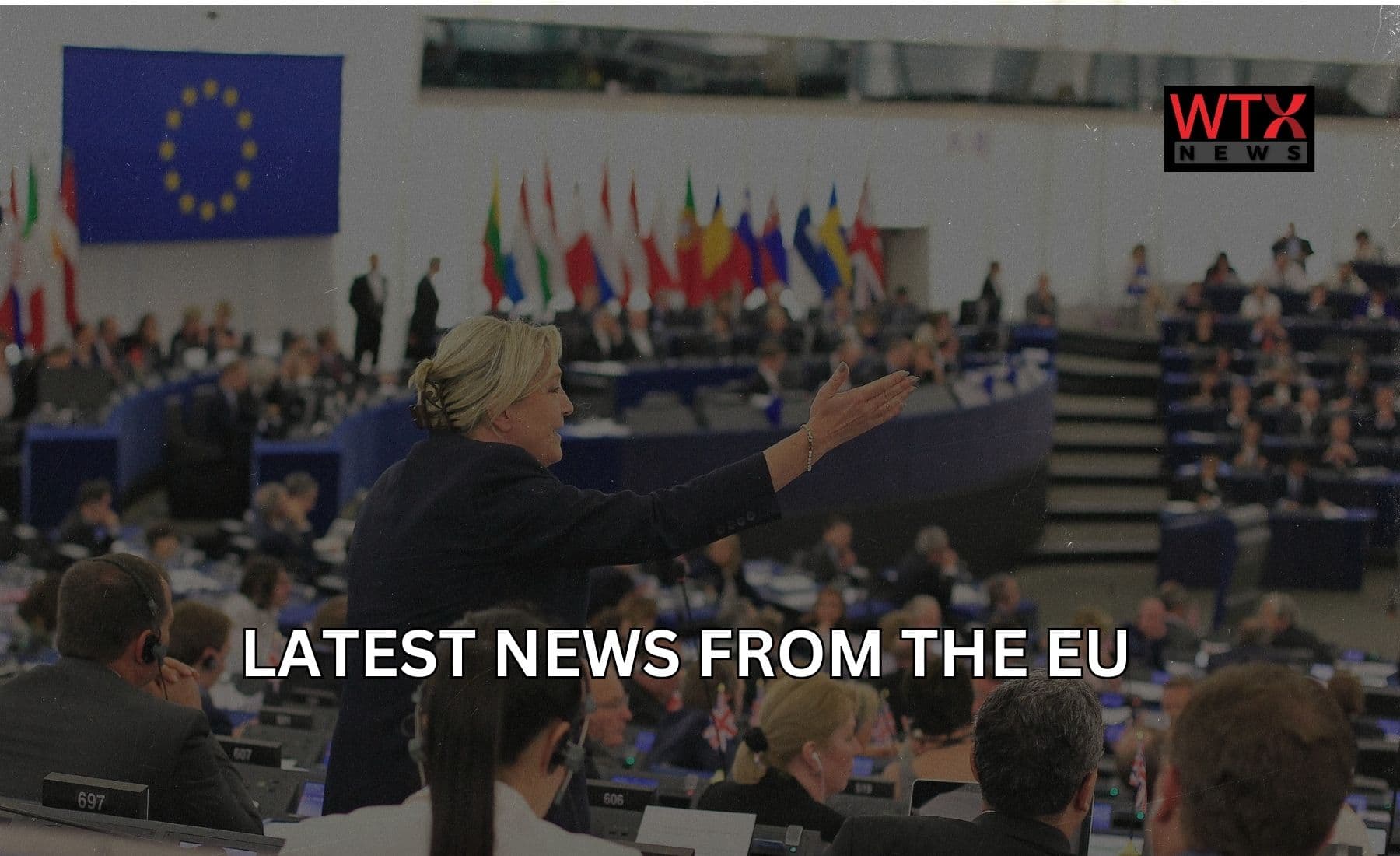
Get you up to speed: Germany’s Fighter Jet Strategy and the Future of European Defence
Germany has confirmed it has no plans to acquire additional F-35 fighter jets, despite earlier speculation that such moves might be necessary due to delays in the Future Combat Air System (FCAS) project. This decision was articulated by a spokesperson for the German Defence Ministry, asserting there are no “concrete” or “political” plans for further purchases.
Mixed reactions have emerged regarding Germany’s commitment to the FCAS project, with German Chancellor Friedrich Merz suggesting the country might abandon it entirely. French President Emmanuel Macron defended the importance of a common European fighter jet, emphasising the need for collaboration.
A decision regarding the future of the FCAS project is expected by the end of the month, with analysts predicting that should it be abandoned, France may independently pursue a new jet. Meanwhile, Germany’s Defence Ministry highlights a focus on European defence production in its budget amidst concerns over reliability from US partnerships.
What we know so far
Germany’s fighter jet dilemma: Faltering European dream and US reality
Germany’s Defence Ministry has firmly stated it will not pursue additional F-35 fighter jets, countering earlier claims regarding the need to fill potential capabilities gaps while the Future Combat Air System (FCAS) project faces delays. A spokesperson mentioned there are no “concrete” plans for such purchases.
The Future Combat Air System has struggled due to disagreements between Airbus and Dassault, with discussions ongoing between German Chancellor Friedrich Merz and French President Emmanuel Macron. Merz’s comments hinted at a potential abandonment of the project, asserting that France, as a nuclear power, has “different needs” than Germany and Spain.
Macron defended the FCAS concept during his recent visit to India, advocating for a unified European defence strategy centred around a collaborative fighter jet. Luigi Scazzieri from the European Union Institute for Security Studies indicated that if the FCAS were to be sidelined, France could produce an aircraft independently.
Germany is contemplating several paths forward, including the possibility of joining the British-Italian-Japanese Global Combat Air Programme or enhancing its own defence capabilities. Scazzieri noted that with its current involvement in F-35 acquisitions, Germany may choose to redirect its focus to different military priorities.
As the end of the month approaches, a decision on the FCAS project looms, while Germany continues to allocate a significant budget towards defence, with an emphasis on European manufacturers for future contracts. This approach reflects an ongoing evaluation of Germany’s defence strategy against the backdrop of fluctuating transatlantic relations.








Great article! This really puts things into perspective. I appreciate the thorough research and balanced viewpoint.
Interesting read, though I think there are some points that could have been explored further. Would love to see a follow-up on this topic.
Thanks for sharing this! I had no idea about some of these details. Definitely bookmarking this for future reference.
Well written and informative. The examples provided really help illustrate the main points effectively.
This is exactly what I was looking for! Clear, concise, and very helpful. Keep up the excellent work!