

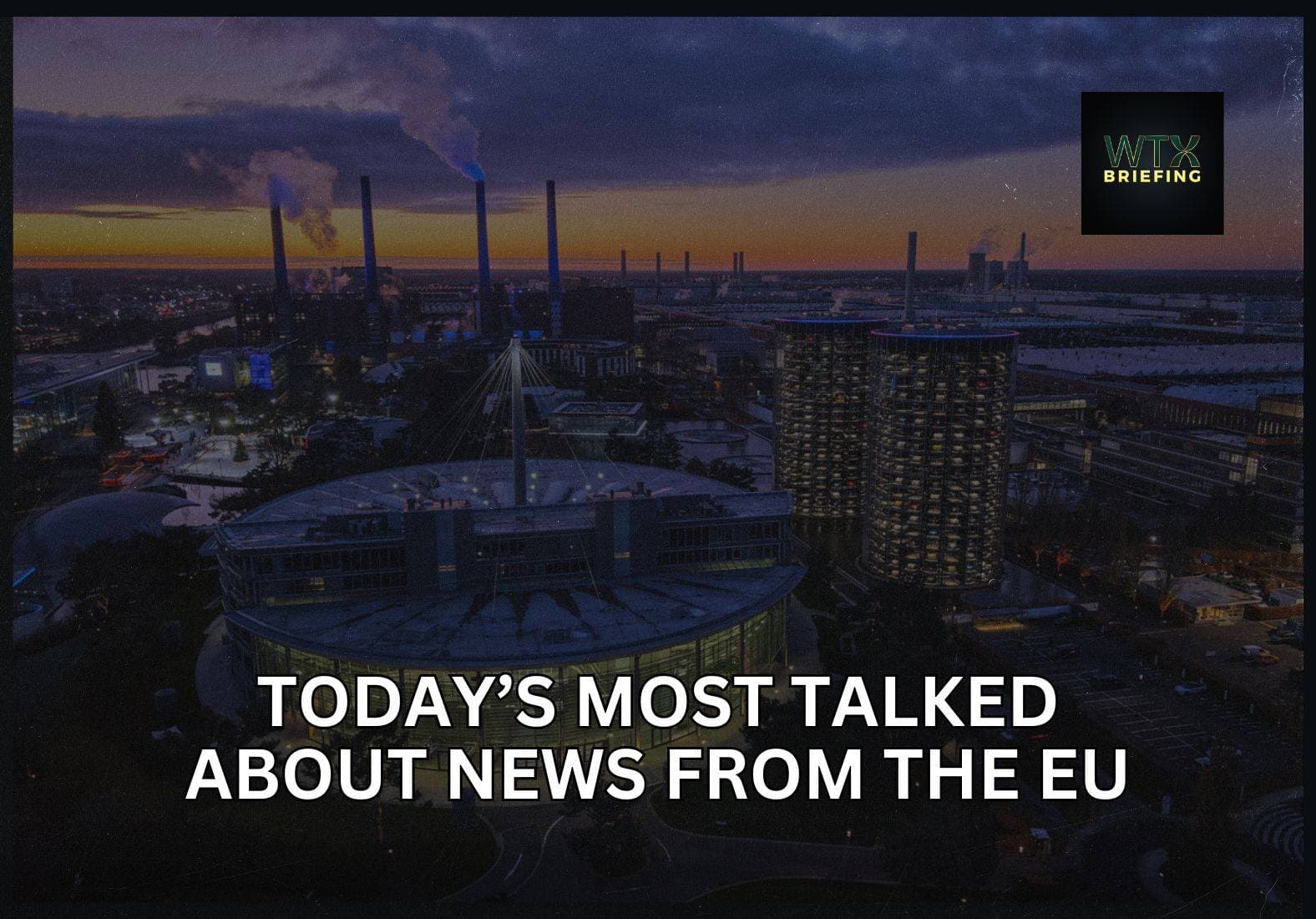
EU Agrees on Legal Framework for €90 Billion Financial Support to Ukraine
Today, the European Union faces a collection of challenges as it seeks to balance geopolitical tensions and trade agreements. The ongoing situation in Ukraine continues to dominate discussions on membership and economic support, while tensions with the US over trade policies remain contentious.
Ukraine is pushed to allow access to pipelines crucial for oil transport, highlighting the intersection of energy and security. Additionally, the EU’s response to labour shortages has led to discussions on migration policy reform. There will be significant focus on these developments in the coming days as responses evolve.
Today’s key developments across Europe
EU urges Ukraine to allow access to pipeline carrying Russian oil
EU FOREIGN POLICY — The EU is calling for Ukraine to permit access to the Russian oil pipeline essential for energy supplies.
This request underscores the EU’s necessity for stable energy routes amid the ongoing conflict. It raises questions about logistics and energy security as European leaders seek solutions. The situation may evolve quickly as talks progress. Learn more about EU foreign policy.
European capitals push back as Ukraine seeks fast-track EU membership
EU MEMBERSHIP — While Ukraine aims for expedited EU membership, member states show reservations.
Negotiations surrounding Ukraine’s EU aspirations highlight concerns among existing members about the implications of rapid inclusion. The debate continues to unfold, influencing future EU expansion discussions. Explore EU membership insights.
Merz Says EU Won’t Accept US Trade Deal on Worse Tariff Terms
EU TRADE — The EU’s commitment to fair trade terms is reaffirmed amidst US negotiations.
The EU’s stance indicates a refusal to compromise on existing tariffs that could impact European industries unfavourably. Ongoing discussions will be critical as both sides seek a mutually beneficial agreement. Find out more about EU trade relations.
EU workers leave Germany despite labour shortage
EU ECONOMY — A notable exodus of workers from Germany is occurring despite high demand for labour.
This development raises alarms about the economic implications of workforce mobility within the EU. With economic activity tied to labour availability, policymakers may need to address the causes of this emigration. Read more about the EU economy.
Russian Central Bank sues EU for immobilising €210 billion in assets
EU SANCTIONS — The Russian Central Bank has initiated legal action against the EU over immobilised funds.
This lawsuit adds complexity to EU-Russia relations amid existing sanctions, reflecting on financial stability and diplomatic tensions. The case may have significant repercussions on future sanctions and international finance. Understand the sanctions landscape.
What to watch: The EU’s approach to NATO partnerships and its economic policies will be pivotal in addressing these interconnected challenges.
Further reading from across European news sources
Financial Times
EU firms coping well with US tariffs, face obstacles within bloc
Reuters
‘We can’t afford it’: EU workers leave Germany despite labour shortage
Euronews.com
How close is the EU to break free from Visa and Mastercard’s grip?
The Guardian
MPs say Starmer’s UK-EU reset lacks ‘direction, definition and drive’
Bloomberg.com
EU and IOM Set Course for Continued Strong Migration Cooperation in 2026





Great article! This really puts things into perspective. I appreciate the thorough research and balanced viewpoint.
Interesting read, though I think there are some points that could have been explored further. Would love to see a follow-up on this topic.
Thanks for sharing this! I had no idea about some of these details. Definitely bookmarking this for future reference.
Well written and informative. The examples provided really help illustrate the main points effectively.
This is exactly what I was looking for! Clear, concise, and very helpful. Keep up the excellent work!