


EU Approves Use of European Social Fund Plus for Abortion Access on March 1
Europe’s decision allows member states to use the European Social Fund Plus for safe and legal abortions, marking a historic advancement in women’s rights.
Brussels emphasises the historic EU decision to allow member states to utilise the European Social Fund Plus for safe abortion access.
Member states have until summer 2024 to implement the European Commission’s ruling allowing access to safe and legal abortion via the European Social Fund Plus (ESF+).
Briefing summary
As the Iran war escalates, concerns mount for women impacted by the internet blackout and ongoing conflict. Iranian academic Ladan Rahbari highlighted the unique burdens faced by women during this turmoil.
In Europe, the European Commission‘s recent decision allows member states to utilise the European Social Fund Plus (ESF+) for safe and legal abortion access, marking a significant step for reproductive rights.
Read in Full
Podcast: From Brussels to Iran — celebrations and struggles this International Women’s Day
While people across Europe prepare to celebrate International Women’s Day on Sunday, 8 March, women elsewhere in the world face growing uncertainty.
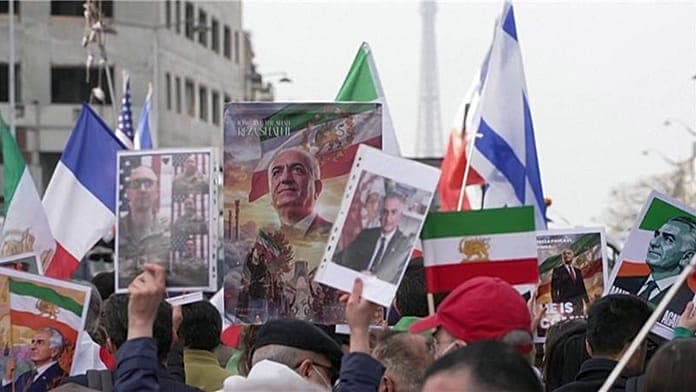
The Iran war and the death of Iran’s Ayatollah Ali Khamenei in US-Israeli strikes on Tehran on Saturday have raised urgent questions about what lies ahead for women in the country.
To answer this question, and to assess where the European Union (EU) stands in terms of gender equality, Brussels, My Love? spoke to four experts: European Women’s Lobby’s secretary general Mary Collins, EU News’ journalist Evelyn Dom, associate professor of sociology at the University of Amsterdam Ladan Rahbari, and Alde’s secretary general Didrik de Schaetzen.
Women in Iran
On the seventh day of the Iran war, accessing information from the Middle Eastern country remains complicated by an internet blackout.
But what is certain is that the situation is worrying for Iranians living both inside and outside the country.
“It’s been a very difficult two months for everybody,” Iranian academic Rahbari told EU News, referring to the protests sparked by the dire economic situation at the end of 2025, their repression, and the recent conflict.
According to Rahbari, in this turmoil, women are paying the higher price. “It is often women who have to bear the responsibility for caregiving for children, for the elderly, and this, of course, impacts women differently based on their own backgrounds and differences,” Rahbari said.
Despite these concerns, Rahbari told EU News she’s trying to “cultivate hope” for the future of Iranian women.
“The one thing that I hold on to is the Women Life Freedom movement in Iran,” she said, mentioning the grass-roots feminist activism sparked by the death of Mahsa Amini while in custody of the Iranian “morality police” in 2022.
The movement, which also has branches across European countries, has faced repression from the Khamenei regime.
“In spite of this and in the midst of all of this, Iranian women do remain defiant,” Rahbari told EU News.
Women in Europe
This year, International Women’s Day in Europe comes just over one week after the European Commission’s announcement that member states can use the European Social Fund Plus (ESF+) to provide access to safe and legal abortion for women who are barred from doing so in their home country.
The ruling was hailed as historic by the European executive, yet sparked many debates.
According to Collins, with this decision, “a door has opened” towards safe and accessible abortion in the EU, but this is only the first step. “What we need to have is the right to abortion in the European Charter of Fundamental Rights,” she told EU News.
Dom, who has been reporting on the topic, explained that the Commission’s decision came in response to the citizens’ initiative “My Voice, My Choice.”
After speaking with its coordinator, Dom noted that while this is not 100% what the initiative wanted, “My Voice, My Choice” still considers this important because it shows that the EU has the competencies to act on sexual and reproductive rights.
De Schaetzen also shared his enthusiasm for the journey of “My Voice, My Choice”: “This is not an initiative that came from a political family or from the European Commission; it came from the citizens. I’m happy that it is a successful example.”








Great article! This really puts things into perspective. I appreciate the thorough research and balanced viewpoint.
Interesting read, though I think there are some points that could have been explored further. Would love to see a follow-up on this topic.
Thanks for sharing this! I had no idea about some of these details. Definitely bookmarking this for future reference.
Well written and informative. The examples provided really help illustrate the main points effectively.
This is exactly what I was looking for! Clear, concise, and very helpful. Keep up the excellent work!